Missing an upper molar can make every meal feel like a compromise. A patient in Wilmington, Newark, Dover, or a nearby Delaware town may hear the same discouraging message, there isn't enough bone for an implant unless the sinus is lifted first.
That does not automatically mean two long surgeries and months of uncertainty. A sinus lift and implant at the same time can be a sensible plan, but only when the bone, the sinus, and the implant can all support that decision on the day of surgery.
| Choice | What it usually means | What matters most |
|---|---|---|
| Same Time | Sinus augmentation and implant placement in one appointment | Enough primary stability at the start |
| Staged | Sinus augmentation first, implant later | Safer when bone is too thin to hold the implant well |
| Best fit | Decided from imaging and what happens during surgery | Anatomy, sinus health, and stability, not hope |
Table of Contents
- When an Upper Molar Is Missing and Time Feels Short
- What a Sinus Lift Actually Does
- Same Time Versus Staged Placement Side by Side
- How Much Bone Is Enough for Same Time Placement
- Lateral Window or Transcrestal and Why It Matters
- Risks and the Plan B You Should Hear About
- Who Tends to Be the Best Candidate
- Talking With a Periodontist and What Comes Next
When an Upper Molar Is Missing and Time Feels Short
A lot of patients hear the same story in different words. The bridge failed, the partial feels loose, or the upper back tooth has been gone so long that chewing on that side just isn't realistic anymore.
That's usually when the question comes up, can the sinus be lifted and the implant be placed in the same visit, or does the patient need to go through two separate procedures? For adults across New Castle and Kent Counties, that question matters because it affects time in treatment, time in recovery, and how many times work and family schedules get disrupted.
A sinus lift and implant at the same time is not a shortcut. It is a conditional plan, and the condition is simple, the implant has to be stable enough to stay put while the grafted area heals.
Practical rule: if the implant cannot hold firmly the moment it is placed, the safer move is to stage the case.
That is why careful planning matters more than the promise of one less appointment. Recovery details after a sinus lift are important, but the decision starts before surgery, with the bone that remains and the way the sinus sits above it.
What a Sinus Lift Actually Does
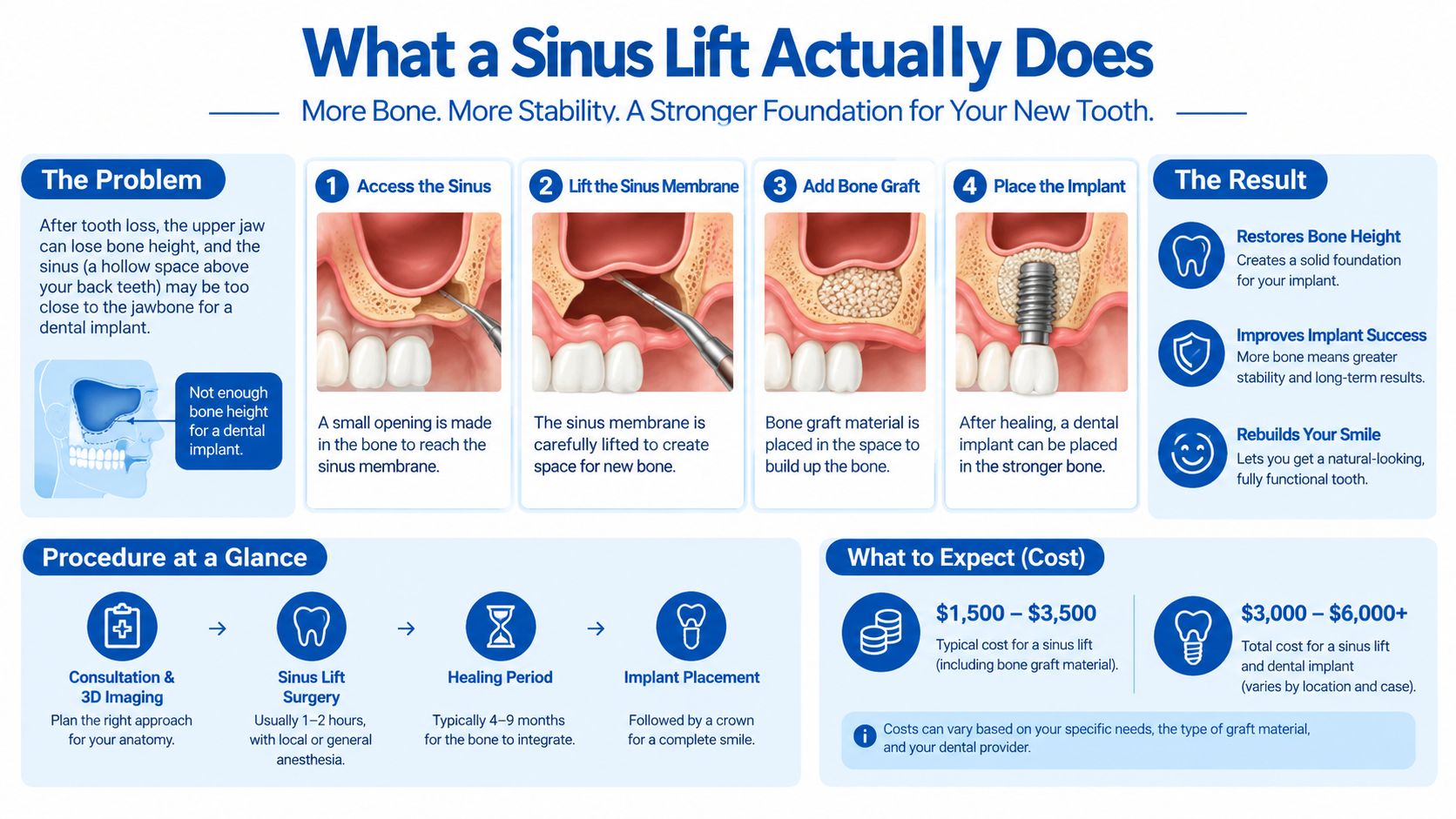
A sinus lift adds height where the upper jaw has gotten too thin for an implant. The goal is simple, create enough space under the sinus so bone can form and support a replacement tooth.
The maxillary sinus is the air space above the upper back teeth. After tooth loss, the bone under it often shrinks, and the available ridge can become too short to anchor an implant safely.
The Two Main Access Routes
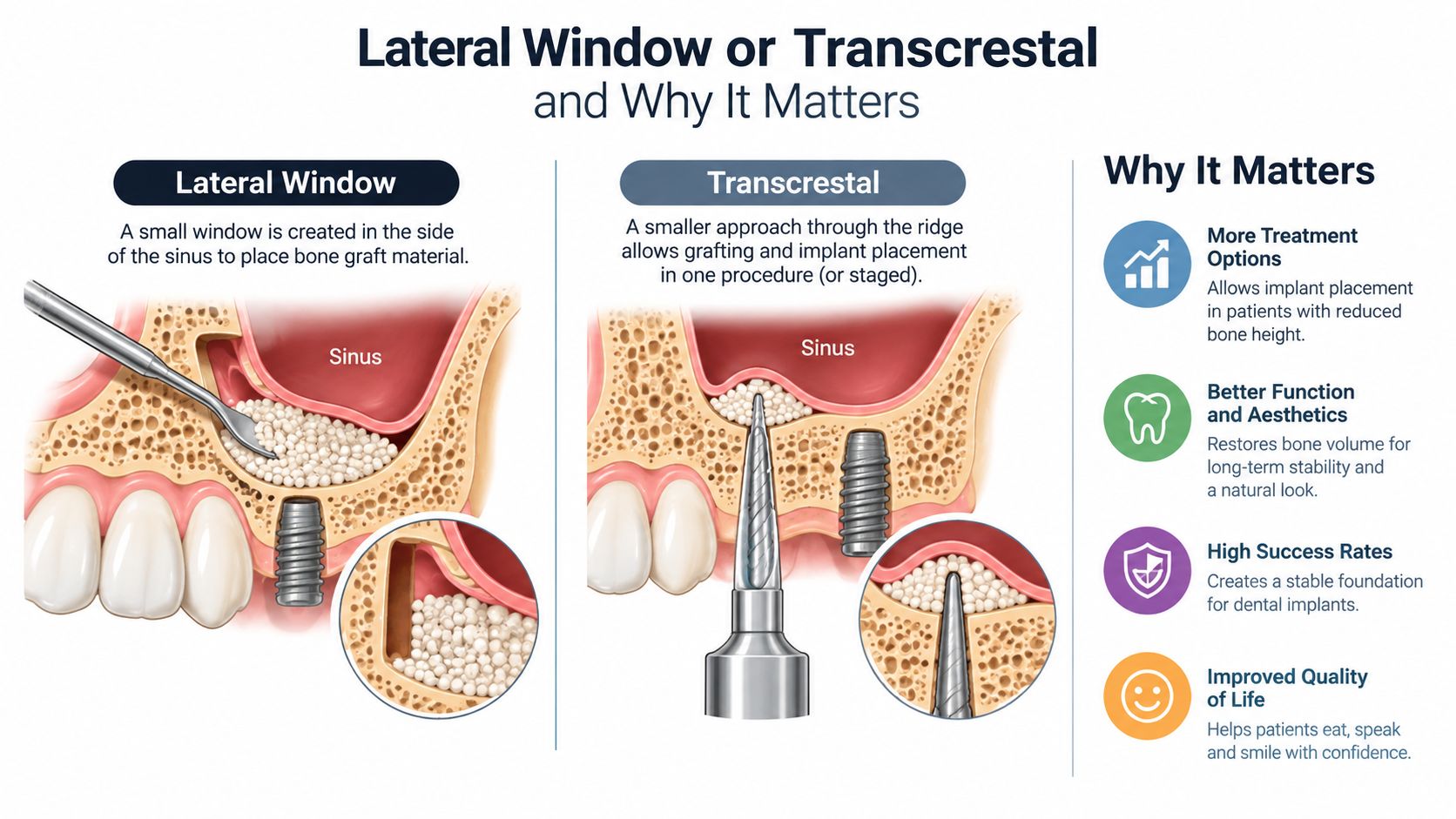
The lateral window approach reaches the sinus from the side of the jaw. It gives the surgeon more room to work and is often chosen when there's very little bone left.
The transcrestal approach works through the implant site itself. It's less invasive, and in selected cases it can be paired with immediate implant placement when the bone and anatomy cooperate.
The thin lining inside the sinus is called the Schneiderian membrane. Surgeons lift it gently, place graft material into the space below it, and let the body turn that grafted area into usable bone over time.
At Periodontal Associates of Delaware, treatment planning uses i-CAT 3D cone beam imaging to measure bone thickness, sinus shape, and the condition of that membrane before surgery is scheduled. That matters because the decision isn't about the calendar, it's about whether the implant can achieve primary stability, which means the implant is anchored tightly enough to stay still right away.
Same Time Versus Staged Placement Side by Side
Patients usually want one direct answer. The honest answer is that both paths can be right, depending on how much bone is left and how stable the implant can be.
A 2025 systematic review of simultaneous sinus augmentation and implant placement reported implant survival rates ranging from 90% to 100% across included studies, with an average follow-up of about 36 months (Open Dentistry Journal full text). That range is useful because it shows the treatment can work well, but it also shows why no one should promise a single outcome for every mouth.
| Criterion | Same Time (One Stage) | Staged (Two Stage) |
|---|---|---|
| Number of surgeries | One combined procedure | Sinus augmentation first, implant later |
| Time to final tooth | Usually shorter | Usually longer |
| Bone requirement | Must support immediate stability | Can be used when bone is too thin at first |
| Comfort burden | Fewer separate visits, but one more involved appointment | More visits, but each step can be simpler |
| Best fit | When the implant can lock in firmly | When stability is borderline or poor |
How the Choice Feels in Real Life
Same-day treatment can reduce the sense of dragging a problem out. It may also preserve the augmented space more efficiently when the implant helps support the site during healing.
Staged treatment is not a setback. It's the better option when the surgeon needs the grafted area to mature before loading it with an implant body.
The smart plan is the one that protects long-term function, not the one that sounds fastest on paper.
That's why many periodontists treat the two approaches as partners, not rivals. One is not “better” in the abstract, it's better only when the anatomy says so.
How Much Bone Is Enough for Same Time Placement
Patients often ask for a cutoff number. The better question is whether the implant can lock in firmly enough today to heal without movement.
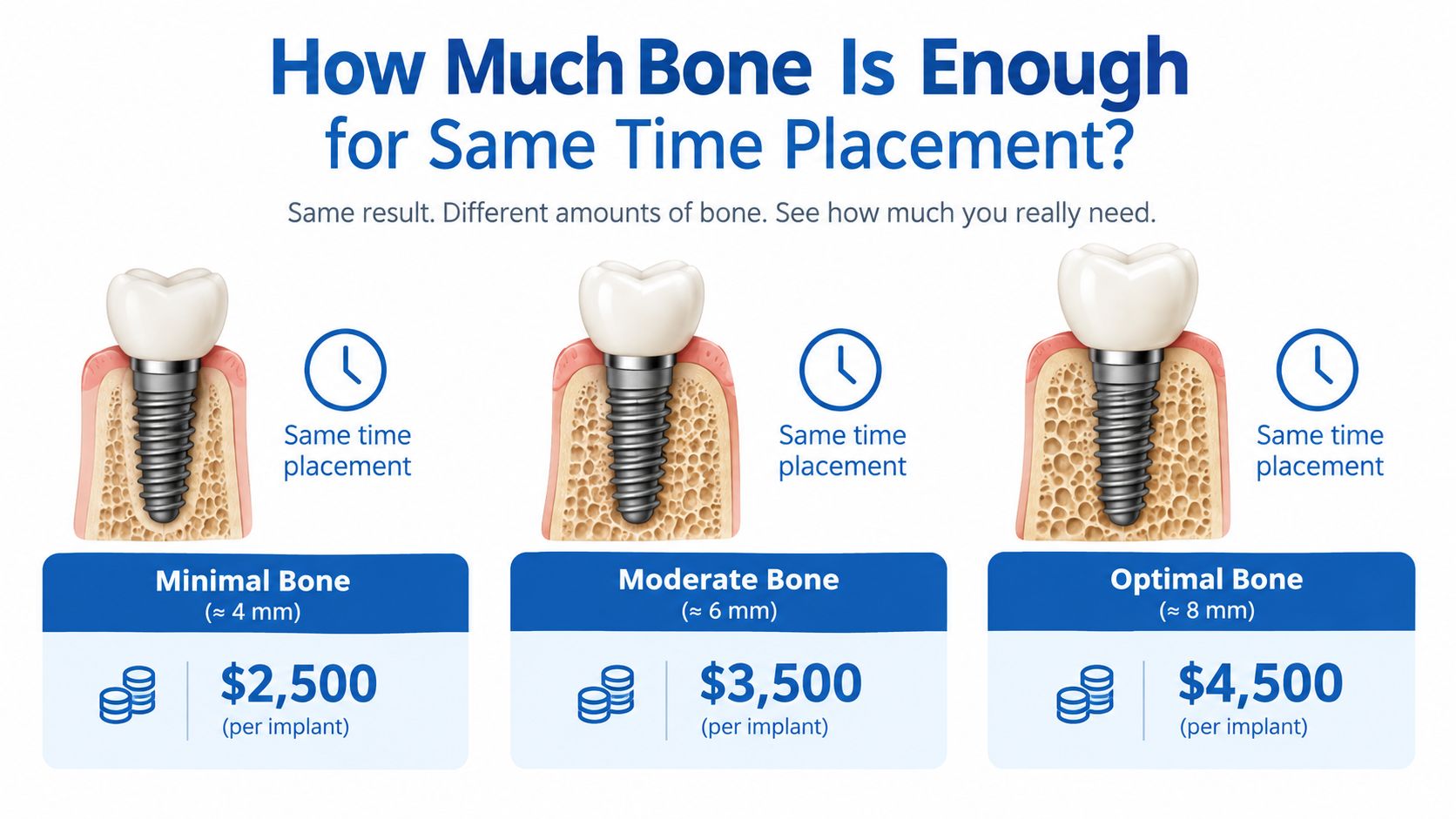
For a lateral-window sinus lift, many clinicians consider about 3 to 4 mm of subantral bone enough for simultaneous placement if primary stability can be achieved. For a transcrestal approach, about 5 mm is the most commonly recommended minimum (expert recommendations review).
Why Stability Beats a Single Measurement
Residual bone height is the bone left between the mouth and the sinus floor. It matters, but it does not tell the whole story. Bone quality, ridge width, implant shape, and the surgeon's ability to get immediate fixation all affect the decision.
A large systematic review screened 839 titles, reviewed 175 full-text articles, and included 48 studies with 12,020 implants. It estimated an annual implant failure rate of 3.48% and a 3-year implant survival rate of 90.1%.
That review helped move simultaneous sinus lift and implant placement into standard care. It also made the point that still holds, survival depends on patient selection, residual bone height, surgical technique, grafting method, implant stability, and follow-up.
A prospective series of 462 implants reported 98.91% cumulative survival and 96.54% success when primary stability was obtained with tapered implants and appropriate technique, including 262 implants placed in posterior maxillae with less than 4 mm of residual bone. That does not mean thin bone is always enough. It means same-day treatment works when the implant can be stabilized properly.
Bone grafting basics for implant planning matter because the implant needs a stable base, not just added volume.
Lateral Window or Transcrestal and Why It Matters
The surgical route changes the whole feel of the case. A lateral-window sinus lift gives broader access, while a transcrestal approach stays more focused and less invasive.
What the Evidence Says About Trade-Offs
A comparison of 149 patients with 3 to 5 mm of bone found similar implant survival for a modified transcrestal approach and lateral elevation, 91.30% versus 93.75%, but membrane perforation was significantly lower with the modified transcrestal technique, 7.24% versus 18.75% (comparative study).
That is the trade-off in plain English. Less invasive doesn't mean always better, but it can mean fewer membrane problems in the right kind of case. The lateral approach still earns its place when more vertical gain is needed or the anatomy is less forgiving.
At Periodontal Associates of Delaware, X-Nav dynamic surgical navigation can help place the implant with precision when the anatomy is tight and the plan depends on exact positioning. That kind of guidance matters because one millimeter in the wrong direction can change whether the implant stays stable or needs to wait.
What patients should know about sinus lift surgery is simple, the route should match the anatomy, not the other way around.
Straight answer: the method is chosen for access, bone volume, and stability, not because one technique is “modern” and the other is “old.”
Risks and the Plan B You Should Hear About
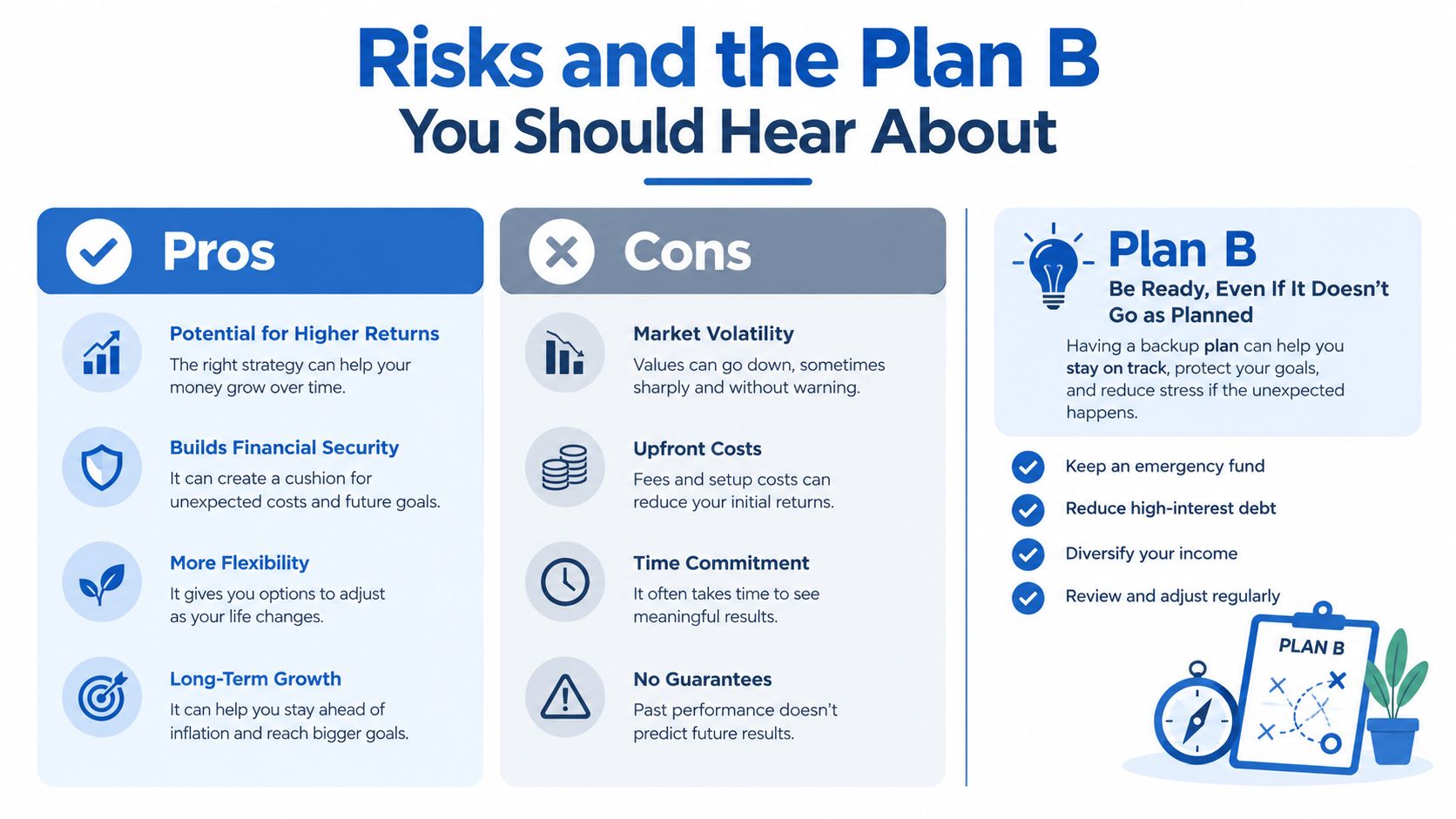
A sinus lift done with implant placement has real risks. The common ones include Schneiderian membrane perforation, bleeding, implant displacement into the sinus, sinusitis, injury to nearby teeth, and blockage of the sinus opening.
These issues are discussed most often with the lateral-window approach because that approach has been studied more thoroughly. Transalveolar techniques may reduce some of that risk, but they still demand careful case selection and a good anatomical map before surgery.
The Switch That Happens Mid-Procedure
The part most patients never hear is the intraoperative switch. In one clinical series, simultaneous placement was possible in 54 of 71 cases, 76.1%. In the remaining 17 cases, the implant could not be inserted because adequate primary stability could not be achieved (clinical series).
That is not a failure. It is good judgment. The surgeon can still complete the sinus augmentation, let the site heal, and return later for implant placement when the bone is ready.
If the implant does not feel solid during surgery, the safer plan is to stop and stage the case.
At a periodontist's consultation, that possibility should be part of the consent conversation from the start. Patients do better when they hear that the plan may change based on what the surgeon finds after the sinus is opened.
Who Tends to Be the Best Candidate
The patient who does best with same-day treatment usually has a site that gives the surgeon room to work and enough bone to hold the implant firmly. A healthy sinus, no active infection, periodontal disease under control, and usable residual bone all point in the right direction.
Smoking, very thin bone, or a major vertical rebuild usually push the case toward staging. The reason is simple. The implant has to stay stable through healing before it can function.
How the Decision Usually Breaks Down
- More likely to qualify for same time: enough native bone for stability, a favorable sinus shape, and a clean CBCT with no obvious sinus problem.
- More likely to need staging: very low residual bone, complex anatomy, or a need for more vertical gain than one visit can safely deliver.
- Technology helps, but does not force the answer: i-CAT CBCT measures the site in 3D, and X-Nav can guide placement when the margin for error is narrow.
What matters is stability, not a single measurement. A case with limited bone can still work when the implant locks in firmly and the surgeon can confirm a stable fit during the procedure. That is why candidacy is judged in the operatory, not from one number on a scan.
When the anatomy is borderline, a board-certified periodontist should ask blunt questions:
- Can the implant hold today?
- Does the sinus look healthy on 3D imaging?
- Would staging lower the risk?
- Would a different access route fit the site better?
Talking With a Periodontist and What Comes Next
The right decision starts with a three-dimensional exam, not a guess from a mirror or a plain dental x-ray. A patient with an upper back tooth missing should expect a careful review of bone height, sinus health, and what kind of implant stability can be achieved.
Same-time sinus lift and implant placement is a well-established option when the anatomy supports it. The evidence shows high survival in selected cases, but the plan should always stay flexible enough to convert to staging if stability falls short during surgery.
That is how a periodontist protects the result. The goal is not to do the most at one visit, it is to build a tooth replacement that can last.
Periodontal Associates of Delaware provides sinus augmentation, implant planning, and 3D imaging review at its Wilmington, Newark, and Dover offices for patients who need bone support before implant placement. For a clear answer about whether a sinus lift and implant at the same time makes sense in your case, request an appointment at the nearest office through Periodontal Associates of Delaware. Individual results vary, and a board-certified periodontist can help weigh the trade-offs and map the safest next step.