A painful bump has appeared beside a tooth, the gum looks swollen, and a bad taste may come from the area when it drains. Many adults first wonder whether food is trapped, whether the swelling will disappear on its own, or whether an antibiotic can solve the problem. A periodontal gum abscess needs prompt attention, but calm, accurate information can make the next step clearer.
Relief after drainage doesn't necessarily mean the infection is gone. The abscess may be the visible sign of a deeper periodontal pocket, bone loss, or active gum disease that still needs treatment. This guide explains what a periodontal abscess means, what can safely be done before an appointment, and why definitive periodontal care matters for patients across New Castle and Kent Counties.
Table of Contents
- Understanding a Periodontal Gum Abscess
- Immediate Self-Care and Symptom Relief
- Diagnosis and Advanced Imaging
- Definitive Treatment - Drainage to Regeneration
- The Role of Antibiotics and Prevention
- When to Seek Emergency Periodontal Care
Understanding a Periodontal Gum Abscess
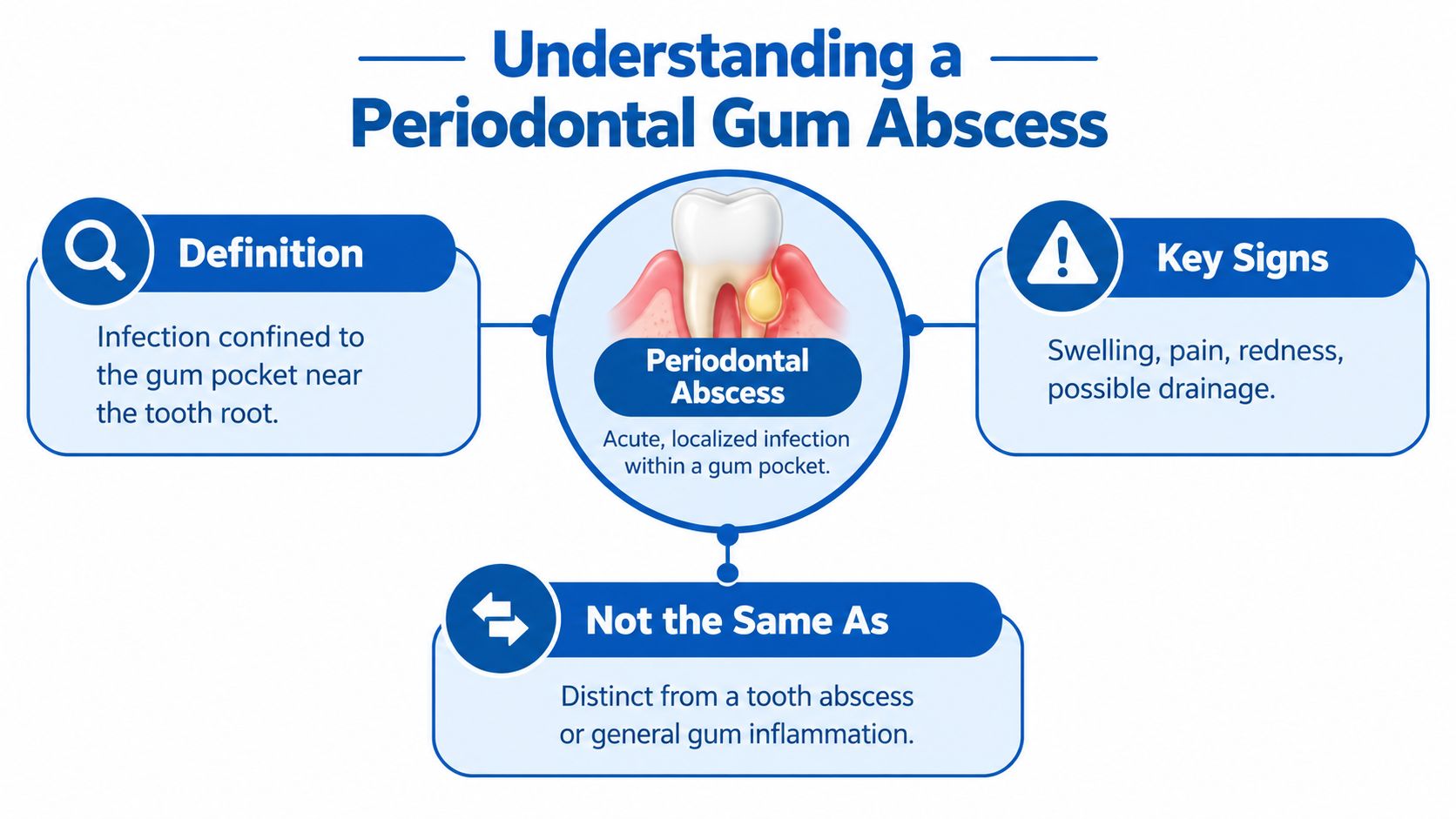
A periodontal abscess is an acute, localized infection that forms within the wall of a periodontal pocket or gingival sulcus. In plain language, bacteria and inflammatory fluid become trapped between the gum and the tooth, often along the root surface. This differs from a periapical, or tooth-root, abscess, which begins inside the tooth and extends toward the root tip. A clinical examination is needed to distinguish them because similar swelling can require very different treatment.
Periodontal abscesses are clinically important rather than rare complications. They're commonly described as the third most frequent acute orofacial infection in UK general dental practice, accounting for about 6% to 7% of cases, behind periapical abscesses at 14% to 25% and pericoronitis at 10% to 11%. Another review places them at roughly 6% to 14% of dental emergencies. These figures come from a clinical reference on periodontal abscesses, and they help explain why a new gum swelling deserves timely assessment without creating unnecessary panic.
What the swelling may look and feel like
Clinically, the swelling often appears as an ovoid enlargement along the root surface. The gum may look red, shiny, or stretched. A patient may notice tenderness, pressure when biting, a deep pocket around the tooth, pus when the gum is touched during examination, or increased tooth mobility.
Bleeding on probing is a primary sign, while pain, suppuration, a deep periodontal pocket, and mobility are common secondary signs. A small bump may therefore represent more than a simple gum irritation. The surrounding tissue can be inflamed even when the visible swelling seems limited.
Why recurrence is possible
The main biologic setting for a periodontal abscess is a pre-existing periodontal pocket. Chronic periodontitis can detach the gum from the tooth and create a protected space where bacteria and debris remain difficult to remove. Foreign-body impaction, local irritation, or a change in drainage can then trigger an acute flare.
A useful distinction is the difference between acute control and definitive care. Drainage can reduce pressure and pain, but it doesn't automatically eliminate the pocket that allowed the infection to form. Patients who have bleeding, recession, bone loss, loose teeth, or a history of gum disease should also review the warning signs described in this guide to levels of gingivitis.
Immediate Self-Care and Symptom Relief
Home care can make the waiting period more tolerable, but it can't remove an infected periodontal pocket. Patients should arrange professional dental or periodontal assessment promptly, even if the swelling opens and the pain improves.
Safe steps before an appointment
Rinse gently with warm salt water. A mild saltwater rinse can soothe irritated tissue and help keep the area cleaner temporarily. The rinse should be gentle rather than forceful. Vigorous swishing can irritate the gum and may increase discomfort.
Keep brushing, but soften the pressure. A soft-bristled toothbrush can clean plaque from nearby teeth without scrubbing the swollen area. Stopping oral hygiene altogether allows more plaque to collect around the pocket. Cleaning should be careful, not aggressive.
Choose easier foods for the short term. Hard, sharp, very hot, or very cold foods may aggravate the area. Chewing on the opposite side can reduce pressure until the infection is evaluated.
Use over-the-counter pain medicine only when appropriate. Nonprescription pain relievers may help when taken exactly as directed on the package. Patients with allergies, stomach or kidney conditions, medication interactions, pregnancy, or other medical concerns should ask a pharmacist or physician which option is appropriate.
Drink water and avoid irritants. Hydration supports general comfort. Smoking, alcohol, and products that burn or sting the gum can make the tissue more inflamed and should be avoided around the affected area.
Practical rule: A periodontal gum abscess shouldn't be squeezed, pierced, or popped at home.
Pressing the swelling may force infected material into surrounding tissue and can cause additional trauma. Even if pus drains, the open pocket may still contain calculus, necrotic tissue, bacteria, or a trapped foreign body. The resulting decrease in pressure can be misleading because symptom relief isn't proof of source control.
What self-care cannot do
Salt water, gentle brushing, and pain relief can address comfort. They don't measure the periodontal pocket, determine whether the tooth is vital, remove deposits from the root, or show whether supporting bone has been lost. They also don't establish whether the swelling is periodontal, endodontic, or caused by another oral condition.
A patient who feels better after spontaneous drainage may still have active disease. Continuing to monitor a shrinking bump without arranging care creates a risk that the infection will recur in the same pocket or progress with less obvious warning. Professional evaluation remains necessary even when the area no longer hurts.
Diagnosis and Advanced Imaging
Diagnosis begins with the history. A periodontist will ask when the swelling appeared, whether it drained, whether biting hurts, and whether the patient has fever, facial swelling, or trouble swallowing. The clinical examination then evaluates the gum color, swelling, pus, tooth mobility, bite, and periodontal pockets around the affected tooth and neighboring teeth.
Following the infection's path
A typical diagnostic visit moves from the visible gum to the structures beneath it. Gentle periodontal probing can identify an isolated deep pocket, while comparison with neighboring sites helps determine whether the problem is localized or part of broader periodontal breakdown. The tooth may also need vitality testing because a tooth-root abscess and a periodontal abscess can look similar from the outside.
At Periodontal Associates of Delaware, advanced evaluation may include i-CAT 3D cone beam imaging when the clinical findings call for a three-dimensional view. This imaging can help assess the relationship between the tooth roots, periodontal bone, nearby anatomical structures, and the suspected area of bone loss. It can also help identify anatomy that a conventional two-dimensional image may not fully show.

Why the diagnosis affects treatment
The same symptom, a gum bump, can reflect different sources. If the infection begins in a periodontal pocket, treatment focuses on drainage and removal of deposits from the root surface. If the tooth pulp is the source, the treatment pathway changes. If a foreign body is trapped, removing that irritant becomes important.
Three-dimensional imaging doesn't replace probing or clinical judgment. It adds anatomical information that can support treatment planning, particularly when bone loss is uneven, the tooth has complex roots, or the swelling's origin isn't obvious. A patient should receive an explanation of what the images show, which findings are certain, and which decisions depend on follow-up after the acute inflammation settles.
Definitive Treatment - Drainage to Regeneration
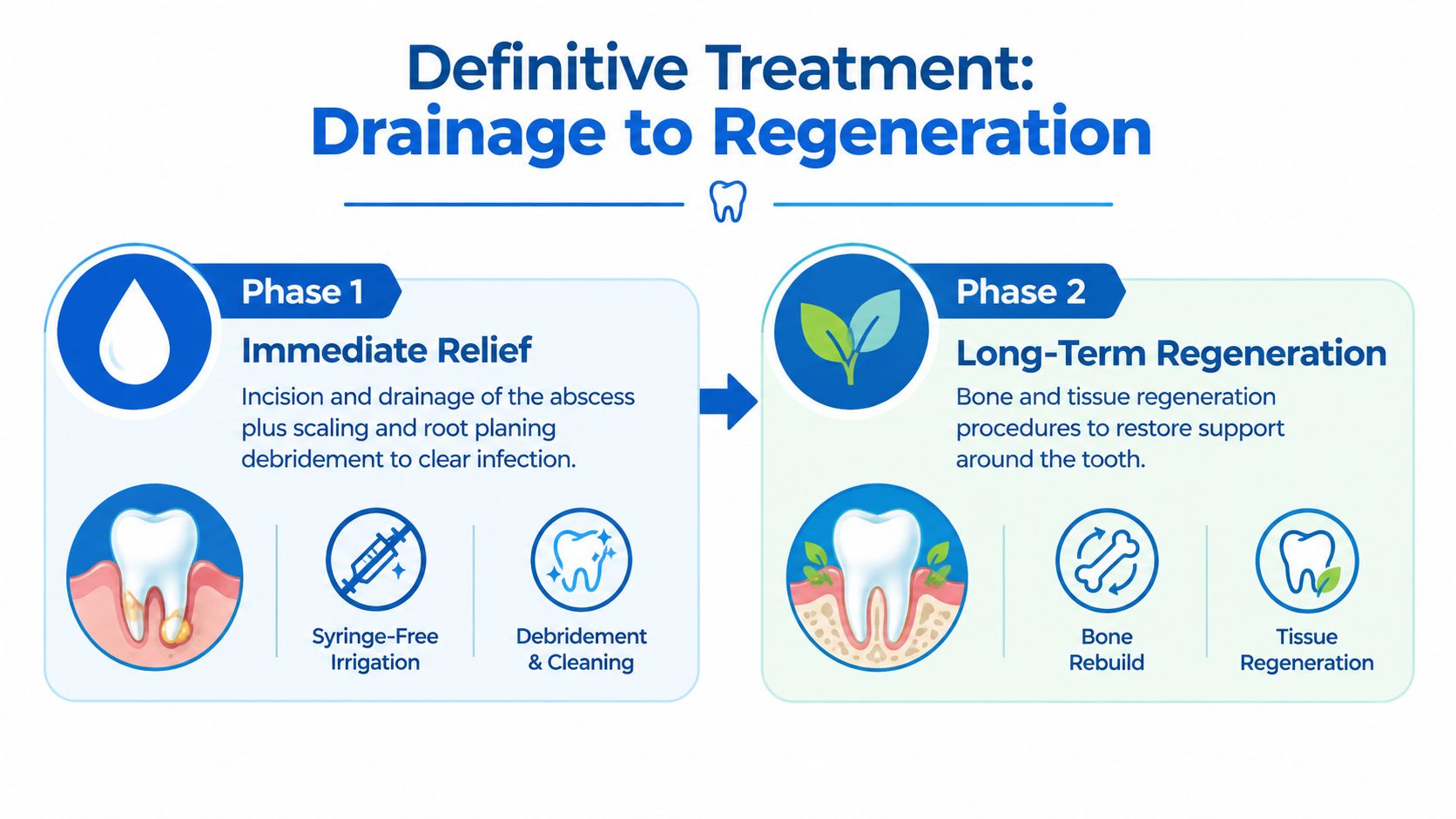
Treatment usually has two separate goals. The first is to control the immediate infection and relieve pressure. The second is to treat the periodontal pocket and damaged support so the same problem is less likely to return.
Phase one addresses the acute infection
For an acute periodontal abscess, expert guidance generally follows a stepwise protocol:
- Establish drainage. The clinician may drain through the periodontal pocket or make a small incision at the most fluctuant point.
- Remove the source. Mechanical debridement or scaling removes necrotic material, calculus, and bacterial deposits that medication cannot physically extract.
- Reassess the tissue. Once swelling and tenderness settle, the clinician can evaluate the remaining pocket and the tooth's prognosis more accurately.
Drainage is often the correct first move, but it isn't a cure by itself. Deep instrumentation during intense acute inflammation may worsen pain or compromise drainage, so definitive subgingival treatment may be delayed until the swelling resolves. That staged decision balances immediate comfort with the need for thorough periodontal therapy.
Phase two treats the pocket
After the acute phase, the periodontist determines whether non-surgical periodontal therapy, surgery, regenerative treatment, or a combination is appropriate. The choice depends on pocket anatomy, remaining bone, tooth mobility, root shape, the patient's health, and the ability to maintain the area.
LANAP, or Laser-Assisted New Attachment Procedure, may be considered for some patients with active periodontal disease. Periodontal Associates of Delaware provides LANAP using the FDA-cleared PerioLase MVP-7. The laser protocol is intended to remove diseased tissue and support periodontal treatment, but suitability depends on the examination and the pattern of bone and tissue loss. It isn't automatically appropriate for every periodontal gum abscess.
Traditional periodontal surgery or regenerative procedures may be recommended when the defect requires direct access, reshaping, or restoration of lost support. Bone grafting can be part of a broader plan when the clinical anatomy supports it. Further information about the role of periodontal bone grafts can help patients understand why regeneration is considered separately from emergency drainage.
What the evidence can and cannot promise
A 2026 systematic review reported short-term improvements after combined management, including probing-depth reductions of about 2 to 3 millimeters, bleeding on probing falling from 100% to 30% to 44%, and tooth mobility declining from 92% to 100% to 0% to 11%. The review also described the evidence as limited and weak, so these figures are benchmark ranges, not guaranteed results. The findings are reported in this systematic review of periodontal abscess management.
The practical message is straightforward. A patient shouldn't judge treatment success only by whether the swelling disappears. The deeper questions are whether the pocket has been controlled, whether the tooth has usable support, whether inflammation has improved, and whether the patient can clean and maintain the area over time.
The Role of Antibiotics and Prevention
Antibiotics have a role in selected periodontal abscess cases, but they aren't a substitute for drainage and mechanical debridement. A localized abscess remains a source-control problem. If pus and infected deposits remain trapped in a periodontal pocket, medication alone may not reach or eliminate the cause.
Antibiotics are generally reserved for systemic signs or spreading infection, such as fever, feeling significantly unwell, enlarged lymph nodes, or infection extending beyond the immediate area. They may also be considered in selected cases involving more extensive infection or endodontic-periodontal involvement. The decision should follow an examination, medical history review, and assessment of the infection's spread. A clinical review of periodontal abscess management and antibiotic decision-making describes this conditional role rather than supporting routine prescribing.
Why mechanical care matters
Mechanical treatment addresses what antibiotics cannot:
- Pocket contents: Debridement removes deposits and infected tissue from the space around the root.
- Drainage: Opening the abscess reduces pressure and allows contaminated fluid to leave.
- Anatomical causes: Examination can identify a foreign body, root irregularity, or pocket shape that encourages recurring infection.
Taking leftover medication or requesting antibiotics without an examination can delay the treatment that controls the source. It can also expose patients to side effects and contributes to broader antimicrobial-resistance concerns. Medication may be necessary, but it should support periodontal treatment rather than replace it.
Reducing the chance of another abscess
Long-term prevention depends on controlling the periodontal environment. Daily brushing and interdental cleaning help remove plaque from areas a toothbrush can't reach. Professional periodontal maintenance helps monitor pocket depths, bleeding, recession, mobility, and changes in bone support.
Patients with gum recession or exposed roots may need a customized cleaning strategy because aggressive brushing can worsen tissue trauma. Guidance on lower gum recession can help explain why recession needs assessment rather than self-treatment. Adults with periodontitis are more likely to develop periodontal abscesses, and the Cleveland Clinic describes the condition as more common among adults in its patient guide to periodontal abscesses.
Maintenance may include periodontal cleanings, improved home-care technique, smoking cessation support, medical coordination when health conditions affect healing, and treatment of persistent pockets. The correct schedule varies by disease activity and individual risk.
When to Seek Emergency Periodontal Care
A localized periodontal gum abscess needs prompt professional attention, but certain symptoms indicate a higher level of urgency. Patients should contact a dental professional immediately when swelling is spreading across the face, jaw, or neck, or when fever and worsening illness occur.
Difficulty swallowing, difficulty breathing, or swelling that affects the airway requires emergency medical evaluation. Those signs may indicate that infection is extending beyond the original gum pocket. Waiting for spontaneous drainage or relying on pain medicine isn't appropriate in that situation.
Patients in Wilmington, Newark, Pike Creek, Hockessin, Bear, Middletown, Dover, and surrounding communities can seek periodontal evaluation through the practice's three Delaware offices in Wilmington, Newark, and Dover. The important decision isn't whether the swelling looks small. It's whether the infection has been diagnosed, drained when necessary, and followed by treatment of the pocket that allowed it to develop.
Individual results vary, and every periodontal gum abscess requires an examination by a qualified periodontist. Prompt care may help protect comfort and supporting tissues, but no treatment can guarantee a particular outcome.
Patients can request an evaluation for a periodontal gum abscess, gum disease, recession, or bone loss at the nearest Wilmington, Newark, or Dover office. Visit Periodontal Associates of Delaware to request an appointment and discuss drainage, periodontal treatment, imaging, and appropriate follow-up care.