A person may notice it while brushing, looking in a mirror, or taking a close-up photo: one tooth seems longer than before. Cold drinks may suddenly sting, or a faint notch may be easier to feel near the gumline. It's natural to wonder whether the gums will grow back and whether surgery is the only answer.
The answer depends on what “grow back” means. Gum tissue that has receded generally doesn't return to its former position on its own. But a periodontist may be able to stabilize the gumline, ease symptoms, or cover an exposed root with treatment chosen for the cause and the condition of the surrounding tissue.
Table of Contents
- The Moment You Notice Your Teeth Look Longer
- Why Gum Tissue Does Not Regrow on Its Own
- How Common Gum Recession and Gum Disease Are
- Stabilization Versus Reconstruction Explained
- What Gum Grafting Can and Cannot Do
- Are Newer Regenerative Materials Worth Choosing
- Prevention and Daily Care That Actually Protects the Gumline
- What To Expect Next and Questions Worth Asking
The Moment You Notice Your Teeth Look Longer
A longer-looking tooth doesn't always mean that recession began recently. The change can happen gradually, so a person may only notice it when cold sensitivity appears or a rough spot catches a fingernail. That can feel alarming, but it's a common reason to seek a periodontal evaluation.
The question “Can gums grow back?” deserves a clear answer: lost gum tissue generally doesn't regenerate to its original position without treatment. That doesn't mean nothing can be done. A periodontist can assess whether the gumline is still changing, identify possible causes, and discuss whether the goal should be preventing further recession, improving comfort, or covering the exposed root.
Recession is common, not exceptional. A U.S. clinical review estimated that 23% of adults have at least one tooth surface with recession of 3 mm or more. The review also advises evaluating untreated recession for active inflammation and possible contributors such as plaque, traumatic toothbrushing, smoking, or tooth position (clinical review of gum recession).
A longer-looking tooth or a sensitive root isn't proof that a tooth is in immediate danger. It is a useful reason to have the area checked rather than waiting for the gum to move back on its own. Early assessment can clarify what's happening and help match care to the patient's needs.
Why Gum Tissue Does Not Regrow on Its Own
Gum recession occurs when the edge of the gum moves away from the crown of a tooth, exposing more of the tooth and sometimes its root. A simple analogy is a garden bed with a border: if the soil and its supporting edge have eroded, watering the remaining plants won't rebuild the missing border in its original position. The cause of the erosion still needs attention, and restoring the border takes more than waiting.
The mouth can heal a wound, but healing isn't the same as replacing tissue that has been lost. With recession, the gum margin has shifted, and the attachment that helps hold gum to tooth may also be damaged. Periodontal disease can affect the connective tissue and bone that support the teeth, which changes what a clinician can safely and predictably restore (NIDCR information on periodontal disease).
That distinction helps explain why a routine rinse or a change in brushing technique can't make an already-receded gumline move upward. Those steps may help reduce irritation or prevent additional damage, but they don't recreate missing gum tissue. A periodontist first looks for active inflammation, trauma, and other factors that could continue to affect the area.
The explanation is meant to clarify the biology, not to suggest that every case requires surgery. The next step depends on whether the tissue is stable, whether the exposed root causes problems, and whether reconstruction is a realistic goal.
How Common Gum Recession and Gum Disease Are
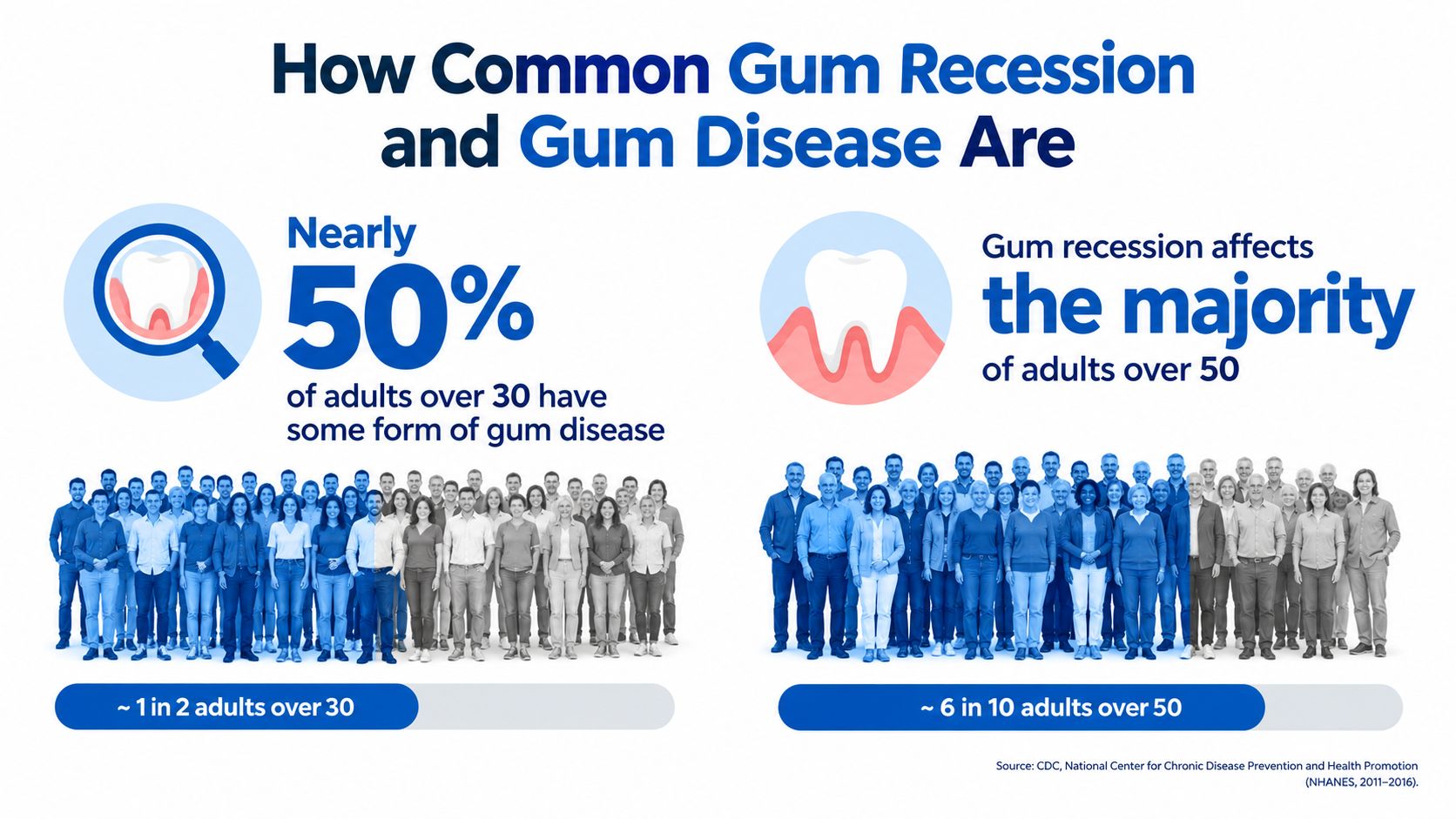
Gum disease affects a substantial share of adults in the United States. CDC surveillance from 2009–2014 found that approximately 42.2% of adults aged 30 and older had periodontitis. That included 7.8% with severe disease and 34.4% with nonsevere disease (CDC overview of gum disease).
The pattern also changes with age: CDC reporting found prevalence reached about 60% among adults aged 65 and older. Those numbers don't mean that every person with recession has periodontal disease. Recession can also involve noninflammatory factors, including brushing trauma, tooth position, or thin gum tissue.
The distinction matters because periodontitis can damage the attachment and bone supporting teeth. Treating active inflammation may help protect what remains, but it doesn't automatically rebuild tissue or bone that has already been lost. That's why an examination is more useful than guessing from appearance alone. A dental professional can check the gumline, look for inflammation, and assess whether support around the teeth has changed.
People who want to understand how gum inflammation is described and monitored can explore the levels of gingivitis. The purpose of early evaluation is practical: identify active disease or trauma, address it, and then decide whether the gumline needs monitoring or a restorative procedure.
Stabilization Versus Reconstruction Explained
Recession care can have different aims, and they shouldn't be treated as interchangeable. Stabilization means addressing a cause that may be driving further recession, such as periodontal inflammation or traumatic brushing. Symptom relief means helping with concerns such as sensitivity. Reconstruction means repositioning or adding tissue to cover an exposed root.
Treating inflammation, infection, traumatic brushing, or another cause may stabilize a gumline and prevent additional attachment loss, even though it won't make missing tissue grow back naturally (overview of nonsurgical management). In other words, stopping a process and rebuilding what it has already changed are separate clinical goals.
| Goal | Typical interventions | Realistic outcome |
|---|---|---|
| Stop or slow further loss | Individualized plaque control, gentle brushing, professional cleaning, and treatment for active periodontal disease | The gumline may become more stable; lost tissue doesn't automatically return |
| Ease symptoms | A clinician may recommend care aimed at sensitivity and protection of exposed roots | Symptoms may improve, even if the gum margin stays where it is |
| Cover an exposed root | A gum graft or another suitable mucogingival procedure | Coverage may improve, but results depend on anatomy and periodontal support |
A stable, shallow area that causes little trouble may not call for immediate grafting. A progressing area, persistent sensitivity, or limited protective tissue may lead to a different discussion. The periodontist considers the cause, the shape of the defect, tissue thickness, and the amount of remaining support before recommending a plan.
Periodontal Associates of Delaware offers periodontal evaluation and treatment options, including scaling and root planing and LANAP using the FDA-cleared PerioLase MVP-7, when clinically appropriate for disease control. Those approaches address periodontal disease; they aren't the same as a graft designed to cover an exposed root.
What Gum Grafting Can and Cannot Do
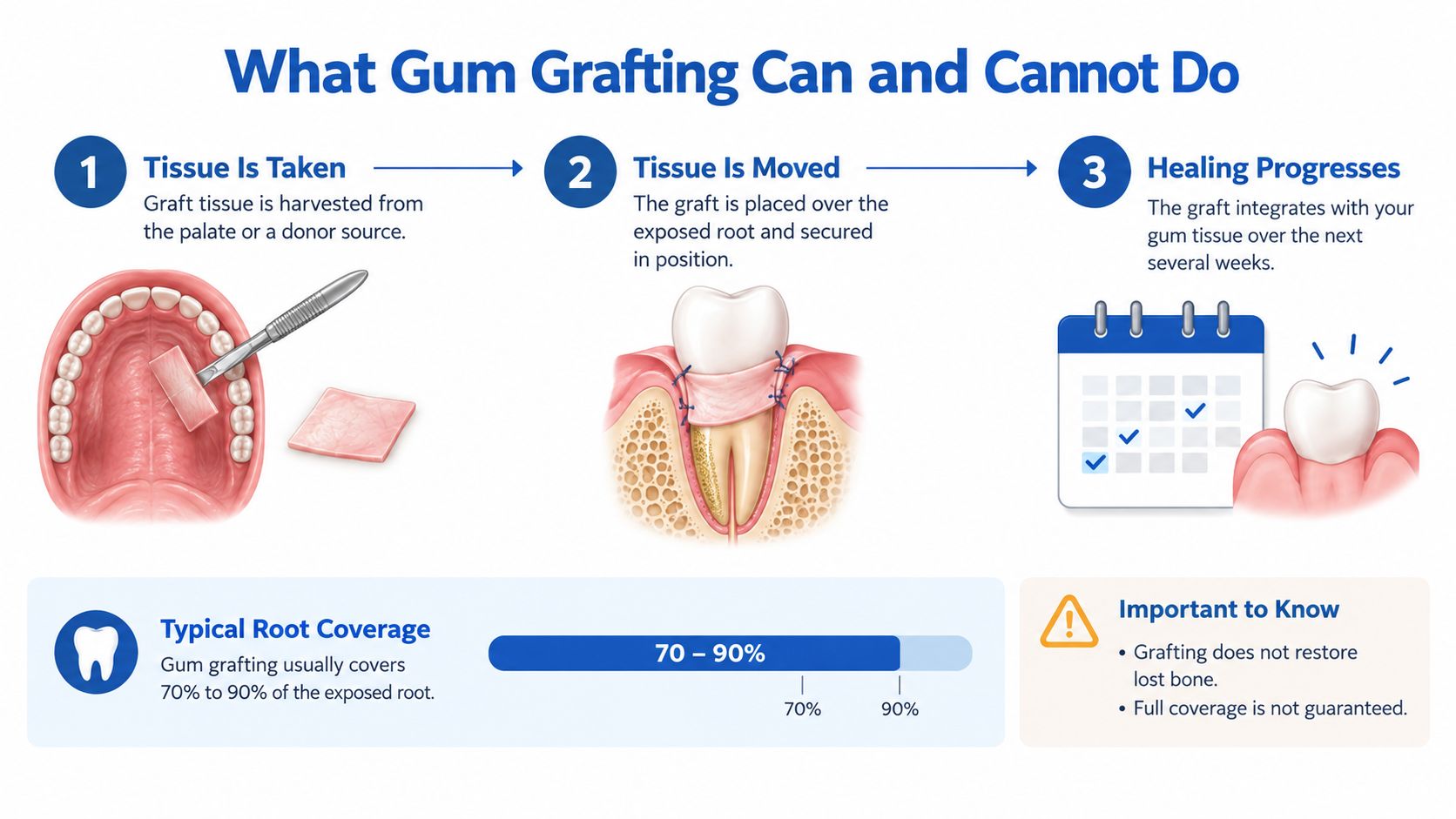
A gum graft adds or repositions tissue to cover some of an exposed root. Depending on the case, a periodontist may use tissue from the roof of the mouth or a donor source. In a commonly used approach, a coronally advanced flap is moved toward the crown and combined with connective-tissue grafting to improve root coverage.
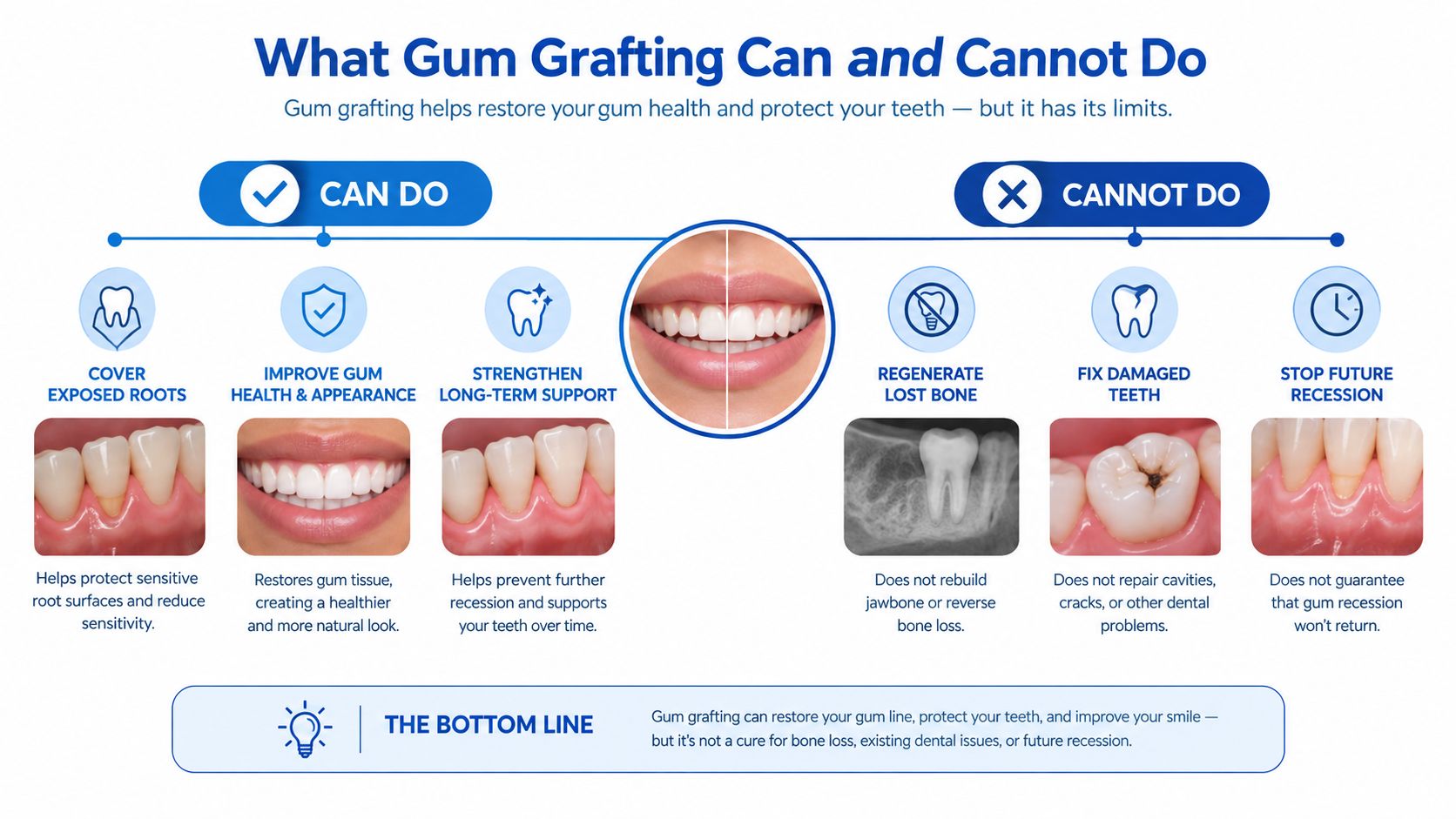
Grafting is a way to professionally correct recession, not proof that the body has naturally regrown the original gumline. A graft may protect an exposed root and improve coverage, but it doesn't restore every part of the attachment system or rebuild lost bone in every case. The plan must account for the root, gum tissue, and supporting bone together.
Published outcomes vary with the technique and the patient's anatomy. A review of surgical approaches reported that coronally advanced flap procedures combined with connective-tissue grafts generally achieved about 70% to 86% root coverage; the cited evidence reported approximately 86% coverage for advanced recession treated with that combination (review of gum-grafting techniques). These are reported study results, not a forecast for an individual patient.
Factors that shape the result
- Defect depth and tooth anatomy: The shape and extent of recession affect how much coverage may be achievable.
- Tissue thickness and bone support: Thin tissue or reduced support can limit predictability.
- Inflammation and habits: Active disease, smoking, or continued brushing trauma can work against healing and long-term stability.
Initial healing takes place over weeks, while the tissue continues to mature afterward. A clinician provides instructions for protecting the graft during recovery and maintaining the result over time. Gentle plaque control and routine periodontal follow-up remain important; surgery doesn't remove the need to manage the factors that contributed to recession.
Are Newer Regenerative Materials Worth Choosing
Newer materials can sound appealing, particularly when they're described as a way to avoid using a patient's own tissue. But “newer” doesn't automatically mean more effective, and a material that suits one defect may not suit another. The relevant question is how well a particular approach fits the patient's tissue, anatomy, and treatment goal.
A 2024 systematic review and meta-analysis included 10 randomized trials, 146 participants, and 457 recession defects. It found that connective-tissue grafting combined with a coronally advanced flap reduced recession depth more than advanced platelet-rich fibrin used with the same flap. The review found no statistically or clinically significant differences for several other outcomes, including recession width, keratinized tissue, probing depth, and clinical attachment (evidence review of regenerative materials).
That doesn't make advanced platelet-rich fibrin or other biologic materials unsuitable in every case. It does mean that they shouldn't be presented as automatically superior. A 2025 review characterized hyaluronic acid as an adjunct to established surgical techniques rather than a replacement for them. Technique selection still depends on the defect, the patient's tissue, and the clinician's assessment.
Patients can ask what a proposed material is expected to do, whether it's intended to replace or supplement a graft, and what evidence applies to their specific recession pattern. Those questions can make it easier to distinguish a useful option from a broad promise.
For a plain-language overview of a related periodontal procedure, see guided tissue regeneration. That procedure and soft-tissue grafting address different clinical needs, so the name of a material alone can't determine the right plan.
Prevention and Daily Care That Actually Protects the Gumline
Daily care can help protect the gumline and support periodontal treatment, whether a patient is monitoring recession or recovering from a procedure. The aim isn't to scrub harder. It's to clean consistently without repeatedly injuring the tissue.
- Brush gently: Use a soft-bristled brush and light pressure. Avoid a forceful back-and-forth sawing motion along the gumline.
- Clean between teeth: Use an interdental cleaning method recommended by a dental professional to remove plaque where a toothbrush may not reach.
- Address smoking: Ask a clinician for help with smoking cessation, especially when periodontal disease or a planned graft is part of the picture.
- Follow a maintenance plan: Keep scheduled periodontal visits so the team can monitor inflammation, tissue changes, and healing.
- Mention grinding or clenching: Repeated pressure may be relevant to a clinician's assessment and should be discussed rather than ignored.
At home, note whether root exposure appears to be progressing, sensitivity is increasing, bleeding continues, or teeth seem to be shifting. Those changes don't diagnose a particular problem, but they are useful details to share at an appointment. Dry mouth can also affect oral comfort and gum health; information about dry mouth and gum disease can help patients prepare questions for a dental visit.
What To Expect Next and Questions Worth Asking
A periodontal evaluation helps distinguish a gumline that needs monitoring from one that may benefit from treatment. The clinician can assess recession, tissue thickness, inflammation, and support around the teeth, then discuss whether stabilization, symptom management, or root coverage best fits the patient's goals.
Does every receded gum need surgery? No. A periodontist may recommend monitoring and cause control when recession is stable and the patient's needs don't call for reconstruction. Surgery may be considered when root coverage or additional tissue is an appropriate goal.
What if gum disease is also present? The infection and inflammation need attention as part of the treatment plan. LANAP may be considered for periodontal disease in appropriate cases, while a connective-tissue graft is used to address selected recession defects. The procedures have different purposes, and a clinician can explain whether either is appropriate.
When should an evaluation be requested? Progressive root exposure, persistent bleeding, increasing sensitivity, or a changing tooth position are reasons to seek professional advice rather than waiting for tissue to return on its own. Individual results vary, so readers should consult a periodontist before choosing a treatment.
Adults in New Castle and Kent Counties, including Wilmington, Newark, Pike Creek, Hockessin, Bear, Middletown, Dover, and nearby communities, can request an evaluation at the nearest of the practice's three offices.
Periodontal Associates of Delaware provides periodontal evaluations and care for gum disease and recession, including LANAP and soft-tissue grafting when clinically appropriate. Request an appointment at the nearest Wilmington, Newark, or Dover office through Periodontal Associates of Delaware.