Have the gums started to feel sore, swollen, or easier to bleed, while the actual problem is something as simple as a mouth that never feels wet enough? That question comes up often because dry mouth and gum disease can look unrelated at first, yet they share the same environment inside the mouth. When saliva drops, the mouth loses part of its natural defense, and that can make inflammation easier to start and harder to calm.
Table of Contents
- Understanding the Link Between Dry Mouth and Gum Health
- How Saliva Protects Your Gums From Disease
- Practical Steps to Manage Dry Mouth and Protect Gums
- Dry Sensation Versus Reduced Saliva Flow
- When to See a Periodontist for Dry Mouth and Gum Issues
- Summary - Protecting Your Gums When You Have Dry Mouth
Understanding the Link Between Dry Mouth and Gum Health
A mouth can feel dry before it is truly short on saliva, so the first clue is often a rough tongue, sticky food, or lips that seem to cling to the teeth. Even then, the concern is not just comfort. Dry mouth can reduce the mouth's natural defenses and make gum tissue easier to irritate.
Why saliva matters
Saliva is more than moisture. It clears away food particles, helps control harmful bacteria and fungi, and carries calcium and phosphate that support oral tissues. It also contains antimicrobial components that help keep microbes in check, so when saliva is low, the gumline loses more than lubrication. It loses part of its defense system too.
That is why a dry mouth can matter even when brushing stays consistent. Saliva works less like a rinse and more like a repair crew that removes debris and leaves behind minerals the tissues can use. Without that support, plaque and residue sit longer near the gums, which gives inflammation more time to start and more room to spread.

Dry mouth still does not automatically mean periodontitis. Plaque control, smoking, diabetes, medications, diet, and access to dental care all affect the outcome. The key point is simpler: when dryness continues, the gums have less help resisting irritation. That is why the question is not whether dry mouth alone causes gum disease, but how much it weakens the conditions that normally protect the gums.
For readers who want a clearer picture of gum inflammation as it develops, this gingivitis resource shows how early change can build before it becomes obvious.
Practical rule: when the mouth feels dry for days or weeks, the gums should be watched more closely, not less.
How Saliva Protects Your Gums From Disease
Saliva protects the mouth in three ways at once. It washes, it buffers, and it defends. When that layer drops, plaque can settle near the gumline, mature, and irritate tissue more easily.
Minerals, flow, and the plaque problem
The mineral side matters because saliva helps support the oral tissues. The cleaning side matters just as much. As saliva moves across teeth and gums, it clears food bits before they turn into a stubborn film.
The image is simple. Saliva works like a moving river, and the gumline is the riverbank. In a healthy mouth, steady flow keeps sediment from piling up. In a dry mouth, the flow slows, debris stays behind, and bacteria have more time to use it.
Plaque itself is not harmless. Once it sits in place, the bacterial community can shift in ways that encourage gingivitis and, if the process continues, periodontitis. NIDCR notes that gum disease begins when plaque hardens and builds up along and beneath the gums, which is one reason reduced saliva can matter so much NIDCR periodontal disease data.
What changes when saliva is low
Low saliva affects more than comfort. Salivary lysozyme, lactoferrin, and histatins help keep bacterial counts in check, so when flow drops, that chemical defense thins out along with the mechanical wash.
Several protections weaken at the same time:
- Less washing action, so food debris stays near the gumline longer.
- Less antimicrobial support, so harmful microorganisms face fewer barriers.
- Less buffering, so acids made by bacteria can linger.
- Less mineral support, so the mouth loses part of its protective environment.
Mayo Clinic also lists increased plaque and gum disease among possible complications of dry mouth, which fits what happens when the mouth's normal cleanup system slows down Mayo Clinic dry mouth symptoms and causes.
Dry mouth, then, is not a single-cause explanation for periodontal disease. It is a setting that can make plaque-related inflammation more likely to begin and more likely to persist. That is why a dry mouth should be taken seriously when the gums are already tender, puffy, or bleeding.
Practical Steps to Manage Dry Mouth and Protect Gums
What helps dry mouth day to day? Start with habits that keep the mouth from drying out further and make plaque easier to remove. These steps do not cure the cause, but they can make the oral environment less sticky, less irritated, and less likely to support gum inflammation.
Daily habits that support saliva and the gums
Sip water often. Small, frequent sips help moisten the mouth and can ease the tight, coated feeling that often comes with dryness. Long gaps without fluids usually make the mouth feel worse, especially during meals or after a lot of talking.
Use sugar-free gum or candy. Chewing or sucking on sugar-free options can stimulate saliva flow, which gives the mouth a little more natural rinsing between meals.
Brush gently with fluoride toothpaste and floss regularly. Even with low saliva, plaque still collects along the gumline. Careful brushing and daily flossing help remove it before it irritates the gums.
Limit sugary or acidic foods and drinks. When saliva is reduced, these items can linger longer and raise the risk of decay and tissue irritation. A drier mouth has less natural buffering, so the gums and teeth have less protection from repeated acid exposure.
Dry mouth care works best when the mouth stays clean and the saliva that remains is used well.
When over-the-counter help may fit
Artificial saliva can help some people, and prescription saliva-stimulating medicine may also be useful in selected cases. These products can improve comfort, but they do not replace plaque removal or a periodontal exam if the gums are already bleeding or swollen.
Medication review matters too. More than 400 medicines can reduce salivary-gland output, so a dry mouth can sometimes be tied to a drug effect rather than a mouth problem alone. That point matters even more if dryness began after a medication change, or if diabetes or Sjögren's disease is part of the medical history.
If dryness lasts beyond two weeks despite sipping water and using a saliva substitute, book an exam rather than trying stronger home remedies. Persistent dryness can point to medication-related or autoimmune causes that need a closer look.
Dry Sensation Versus Reduced Saliva Flow
A dry feeling in the mouth is not always the same as making too little saliva. That difference sounds small, but it changes how gum risk should be judged. Xerostomia is the symptom, while hyposalivation is the measurable drop in flow.
Why the distinction matters
Some people feel very dry even when salivary testing is normal. Others have a low flow rate but don't describe severe dryness. That is one reason the link between dry mouth and periodontal disease is complex, not automatic.
The mouth can feel dry for several reasons that are not all the same biologically. Mouth breathing, hydration status, oral hygiene, caries, bleeding, pocket depths, and medication effects all deserve attention. A normal saliva test does not erase symptoms, and symptoms alone do not prove the glands are underperforming.
A dry mouth complaint should trigger a careful review, not a guess.
What clinicians look at instead of guessing
A good evaluation usually considers the whole picture, not one symptom in isolation. That includes whether the person takes multiple medications, whether there is diabetes or Sjögren's disease, whether the mouth breathes at night, and whether the gums already show bleeding or recession NIDCR dry mouth overview.
The evidence base also deserves a clear-eyed look. A 2025 umbrella review found only three high-quality systematic reviews on xerostomia management, and more than 80% of the included reviews were rated critically low quality umbrella review. That does not mean dry mouth is unimportant. It means common advice often rests on limited evidence, so careful clinical judgment matters.
Many anxious patients get stuck here. They assume every dry mouth means dangerous gum disease, or they assume every dry mouth is harmless if they drink more water. Neither assumption is strong enough. A clinician needs to look at symptoms, flow, and periodontal signs together.
When to See a Periodontist for Dry Mouth and Gum Issues
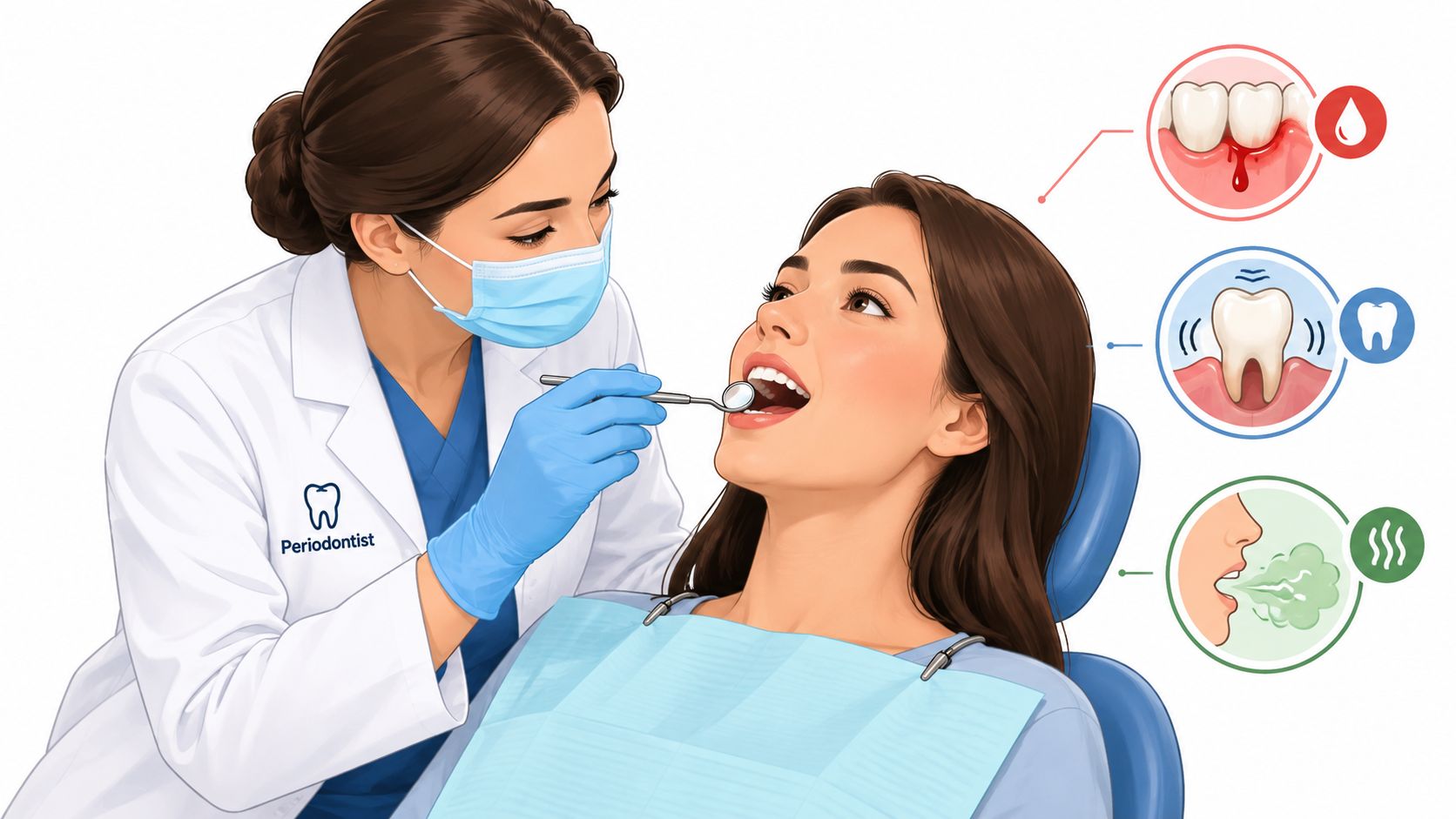
Persistent dryness becomes more concerning when it comes with bleeding gums, swelling, recession, bad breath that doesn't improve, loose teeth, or chewing difficulty. Those signs suggest the problem may be more than simple dehydration. They call for a periodontal exam, not just another glass of water.
What a periodontal visit can clarify
A periodontal exam can check for bleeding, pocketing, recession, root decay, and mobility. Those findings help separate a mouth that feels dry from a mouth that is already showing tissue breakdown. If there is also pain, swelling, or a gum boil, a related issue such as an abscess may need prompt attention, which is why a resource on periodontal gum abscess symptoms can be useful for context.
Advanced imaging can also help when treatment planning is needed. In Delaware, periodontal care may include i-CAT 3D cone beam imaging, and when implants are part of the picture, X-Nav dynamic surgical navigation can support precise planning. For gum disease treatment, LANAP laser gum surgery using the FDA-cleared PerioLase MVP-7 may be part of a modern periodontal approach when clinically appropriate.
Those tools do not replace a careful diagnosis. They support it. A well-run periodontal evaluation looks at the gums, the bone, the teeth, and the saliva story together.
Signs that should not be brushed off
- Bleeding with brushing or flossing, because inflamed gums are telling a story that needs attention.
- Persistent bad breath, especially when it keeps returning after cleaning.
- Loose teeth or new spaces, which can signal support loss.
- Visible recession, since exposed root surfaces can become sensitive and vulnerable.
- Chewing discomfort, because function often changes before panic sets in.
Adults in Wilmington, Newark, Pike Creek, Hockessin, Bear, Middletown, Dover, and nearby communities often wait because they hope dryness will pass on its own. When it does not, a periodontal evaluation can keep a small problem from becoming a bigger one.
Summary - Protecting Your Gums When You Have Dry Mouth
Can dry mouth make gum disease easier to develop? Yes, because saliva does more than wet the mouth. It washes away debris, helps balance minerals, and supports the mouth's natural defense against harmful microbes. When that protection is reduced, the gums can become more exposed to inflammation, especially if plaque is already building up.
The next question is whether the mouth only feels dry or is really producing too little saliva. Those are related, but they are not the same thing, and the exam should reflect that difference. A periodontist may check unstimulated salivary flow, review medications, and look at brushing, flossing, mouth breathing, and medical history before deciding what is driving the problem.
Daily care still matters. Water, sugar-free gum, fluoride toothpaste, and saliva substitutes can make the mouth more comfortable, and limiting sugary or acidic items can reduce extra irritation. If the gums are bleeding, swollen, or receding, home care alone is not enough.
If the teeth feel less stable, ask for a periodontal evaluation rather than guessing. Tooth movement can point to support loss, and a tooth mobility evaluation can help separate early warning signs from simple dryness. The right plan depends on the gums, the bone, the saliva, and the rest of the medical picture.