Are gum graft alternatives really about avoiding surgery, or are they sometimes about choosing the right kind of treatment for the cause of recession? Adults with exposed roots often worry about palate harvesting, stitches, and a long recovery, but the better question is whether the problem is active gum disease, thin tissue, root coverage, sensitivity, or a mix of all four. For patients in Wilmington, Newark, Dover, and surrounding Delaware communities, Periodontal Associates of Delaware evaluates those details across its Wilmington, Newark, and Dover offices, using LANAP with the FDA-cleared PerioLase MVP-7, i-CAT 3D cone beam imaging, and X-Nav dynamic surgical navigation when those tools fit the case. Individual results vary, so a periodontist should confirm what the recession is doing and what it needs.
Table of Contents
- 1. LANAP for disease control
- 2. Pinhole Surgical Technique for tissue repositioning
- 3. Acellular Dermal Matrix as a replacement scaffold
- 4. Coronally advanced flap with guided tissue regeneration for coverage plus barrier support
- 5. Collagen-based xenogeneic graft materials for scaffold support
- 6. Connective tissue grafting with barrier techniques for the most predictable coverage
- 7. Non-surgical management and regenerative periodontitis therapy for cause control
- Gum Graft Alternatives: 7-Method Comparison
- Choose the Least Invasive Suitable Option
1. LANAP for disease control
LANAP belongs at the top of the list when recession is being driven by active periodontal disease. It is not a direct root-coverage procedure, but it can change the conditions that keep recession moving. The protocol uses a laser to remove diseased tissue while preserving healthier structures, which may help the mouth heal in a way that supports new attachment rather than further breakdown.
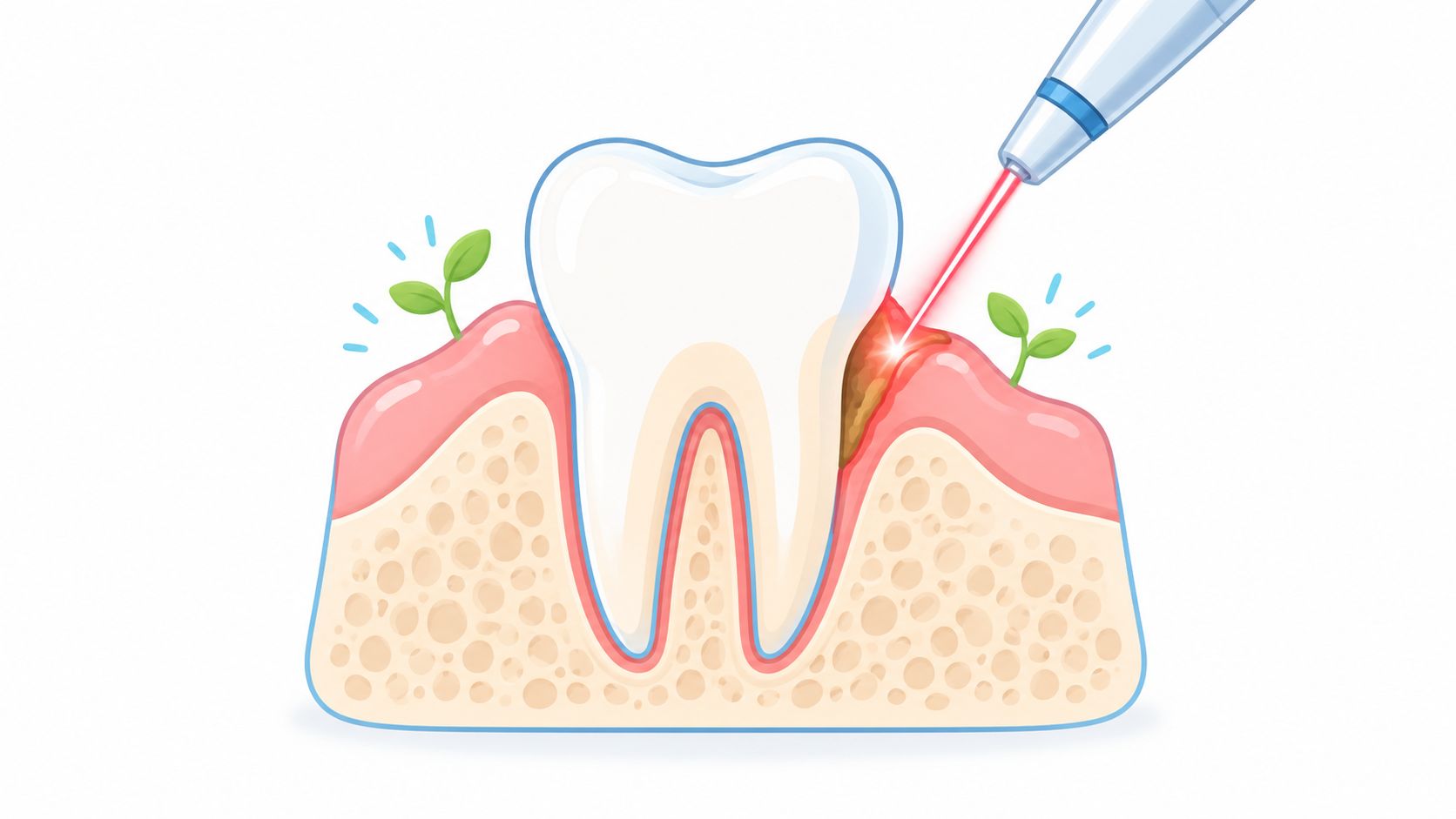
A practical way to think about LANAP is this, it may help when the priority is controlling infection and protecting tissue, not instantly covering the root. That matters for patients who have bleeding gums, deep pockets, or recession that worsens because inflammation is still active.
The phrase “alternative” can be misleading here, because disease control and root coverage are not the same goal. If the gums are inflamed, any cosmetic or regenerative procedure is on shaky ground until the disease is controlled.
The office team often uses a full periodontal evaluation before deciding whether LANAP is a fit, especially when the recession appears tied to bone loss or general periodontal breakdown. A patient with moderate recession from gum disease may care more about stopping progression than getting a graft right away.
See how laser gum treatment is discussed for patients
Practical rule: if the gums are still inflamed, the first win is often disease control, not root coverage.
2. Pinhole Surgical Technique for tissue repositioning
Pinhole-style treatment is different because it repositions existing gum tissue rather than borrowing tissue from the palate. A small access point lets the clinician loosen the gum and move it over the exposed root, which can make the procedure feel less invasive to some patients. It appeals most when the goal is coverage with less disruption to the mouth.
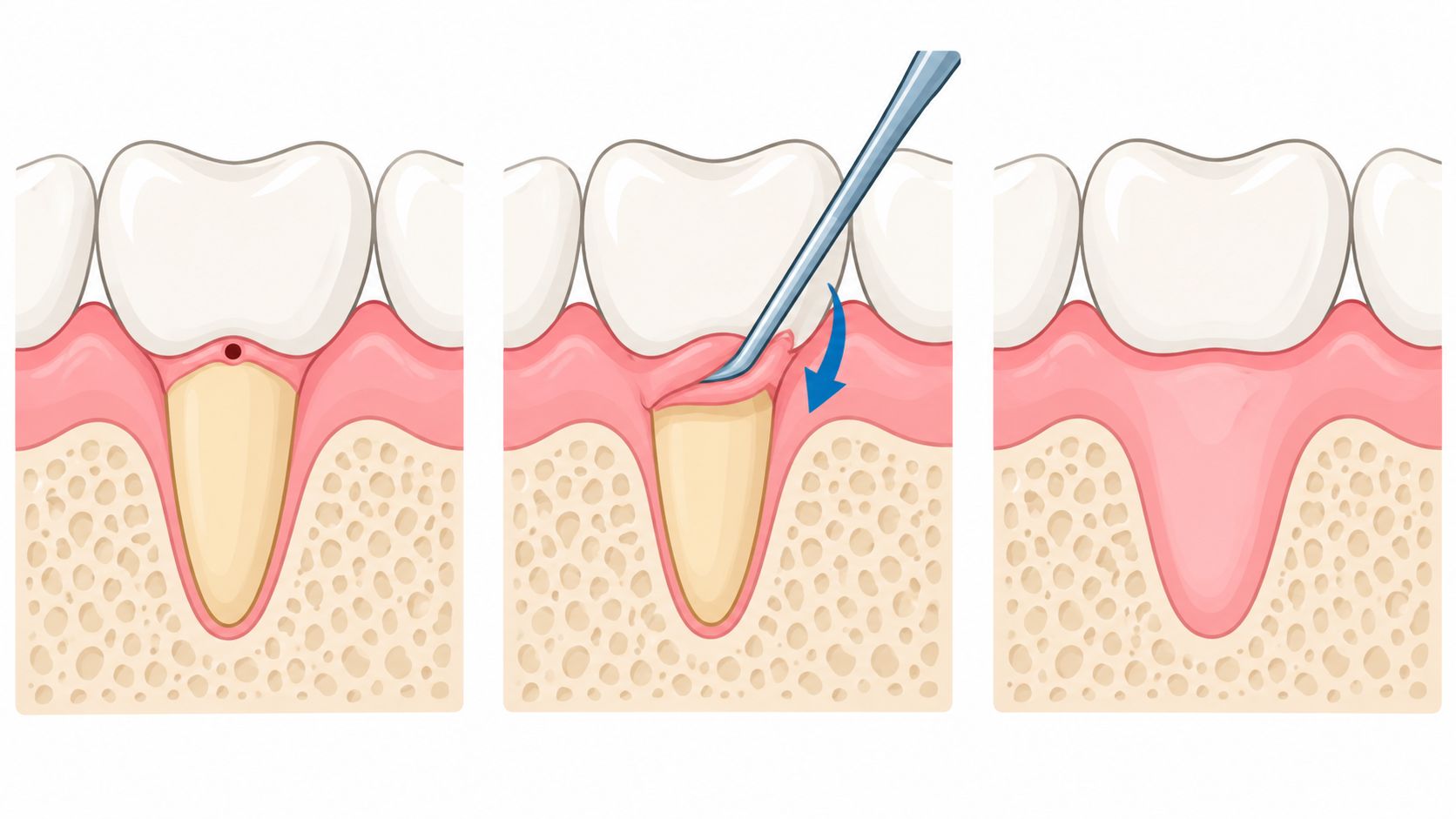
This option makes the most sense when the tissue is still reasonably thick and mobile. It is often discussed for cosmetic recession on upper front teeth, where patients want a faster recovery and want to avoid a second wound site.
The trade-off is predictability. The tissue has to move enough to cover the root and stay stable, which is not always possible if the gums are thin, tight, or pulled by an unhealthy bite or frenulum. A patient asking for the least invasive path still needs a defect-specific exam.
Read more about recession patterns and frenulum-related tension
Patients often want the shortest recovery, but the real question is whether the tissue can be moved safely and held there.
A useful clinical conversation includes brushing habits, inflammation control, tooth position, and the amount of attached tissue already present. If those factors are favorable, pinhole-style treatment may fit well. If they are not, pushing tissue around can lead to disappointment.
3. Acellular Dermal Matrix as a replacement scaffold
Acellular dermal matrix, or ADM, changes the game by acting as a scaffold instead of a donor site harvest. The material is processed from donated human tissue so cells are removed while the collagen framework remains, and that framework gives the patient's own tissue something to grow into. That makes ADM a practical choice when palate tissue is limited or the patient wants to avoid a second wound.
ADM is one of the better-supported gum graft alternatives for patients who need a morbidity-reduction option. Evidence in the periodontal literature shows it can perform comparably to connective tissue grafting for several root-coverage measures, while still preserving the advantage of avoiding palatal harvesting. More recent data are more cautious about universal equivalence, so it is best understood as a useful substitute, not a perfect stand-in for every case.
For real-world planning, ADM can be helpful when multiple recession sites need treatment and there is not enough usable tissue to harvest from the palate. It can also fit patients who are anxious about a second surgical wound or who have a thin palate that does not offer much donor material.
The key is to match the scaffold to the defect. Deep recession, thin tissue, high esthetic demands, and flap design all affect whether ADM can do the job well.
Ask about tissue sourcing, incorporation time, and protection of the site after surgery. A scaffold still needs a stable environment to integrate, which means gentle oral hygiene and avoidance of mechanical trauma during healing.
4. Coronally advanced flap with guided tissue regeneration for coverage plus barrier support
A coronally advanced flap, or CAF, changes the position of the patient's own gum tissue. The periodontist loosens the tissue, moves it upward over the exposed root, and secures it there. Adding guided tissue regeneration, or GTR, places a barrier beneath the flap to help organize healing and support regeneration rather than allowing the space to fill with scar tissue.
CAF with GTR addresses the recession itself by repositioning tissue over the root. It may suit a defect where the gum has enough flexibility to move without tension and where the underlying periodontal support and inflammation status are acceptable. Beyond covering the root, this option can also improve the quality of the support underneath it, making the treatment relevant to both appearance and periodontal stability.
A Cochrane review found insufficient evidence of a difference in recession reduction between ADM plus CAF and SCTG plus CAF, and between enamel-matrix protein plus CAF and SCTG plus CAF. The finding does not make these procedures interchangeable. Defect anatomy, tissue thickness, interdental support, root prominence, inflammation control, and the patient's goals still determine the appropriate approach.
The trade-off is that the barrier adds a regenerative framework, but it does not correct poor case selection or an unstable healing environment. Its value depends on whether the flap can remain stable and whether the surrounding tissues can support healing.
A barrier membrane can support healing, but it can't rescue a defect that isn't suited for the technique.
Patients need to protect the site from pulling, harsh rinsing, and aggressive chewing while the flap and membrane settle. These instructions are simple, yet early mechanical trauma can interfere with the intended coverage and tissue maturation.
5. Collagen-based xenogeneic graft materials for scaffold support
Could a collagen scaffold provide support without harvesting tissue from the palate? These materials come from animal-derived sources, commonly porcine or bovine collagen, and are processed into biocompatible scaffolds. They provide a framework for the patient's own soft tissue during healing, but they do not reposition the gum by themselves or remove the cause of recession.
This option may suit patients with several recession sites, limited palatal tissue, or a preference to avoid a second surgical wound. It can also make treatment planning more practical when one processed material is needed across multiple sites. The choice still depends on tissue thickness, recession depth, root prominence, interdental support, and whether inflammation and plaque control are stable.
The main trade-off is tissue quality and predictability. A scaffold may improve comfort and avoid donor-site morbidity, yet it does not reproduce the thickness, resilience, or handling characteristics of the patient's own connective tissue. It may support coverage or tissue thickening in a suitable defect, but it cannot compensate for inadequate periodontal support, active disease, or a flap that cannot remain stable.
A patient with multiple defects and limited palatal tissue may accept this compromise to avoid creating another wound. Another patient may prioritize a less invasive procedure, even if the expected tissue characteristics differ from those of autogenous tissue.
Collagen materials work best as part of a plan that includes sound flap design, disease control, and careful protection during healing. They are a scaffold option, not a substitute for correcting unfavorable anatomy.
6. Connective tissue grafting with barrier techniques for the most predictable coverage
Subepithelial connective tissue grafting, or SCTG, still matters because it remains the benchmark when the goal is predictable root coverage and stable tissue thickness. The procedure uses tissue from beneath the surface of the palate and places it under the gum at the recession site, then covers it with the flap. When barrier techniques are added, the clinician can also create a more regenerative environment for the surrounding periodontal tissues.
This option is not a “no graft” alternative, but it belongs on any honest list because some recession patterns still respond best to the patient's own tissue. That is especially true in high-esthetic zones, where long-term contour and tissue resilience matter just as much as root coverage.
A good fit often includes moderate to severe recession, thin tissue, or cases where the patient wants the most natural-looking result the anatomy can support. The palate does have a recovery period, and initial discomfort is part of the trade-off, but the benefit is strong tissue quality when the case calls for it.
Learn how lower gum recession is approached in periodontal care
When tissue thickness is the main problem, a scaffold may not be enough, the clinician has to build real bulk.
Patients should ask how much donor tissue is needed, how long healing will take, and whether a barrier membrane is part of the plan. That conversation helps separate comfort preferences from the actual biologic needs of the defect.
7. Non-surgical management and regenerative periodontitis therapy for cause control
Non-surgical care may not cover a root, but it can still be the right answer when the main problem is disease activity, irritation, or sensitivity. Scaling and root planing removes bacterial buildup below the gumline, and improved home care can reduce inflammation enough to stabilize tissue that would otherwise keep breaking down. For selected patients, that is the difference between ongoing loss and a controlled situation.
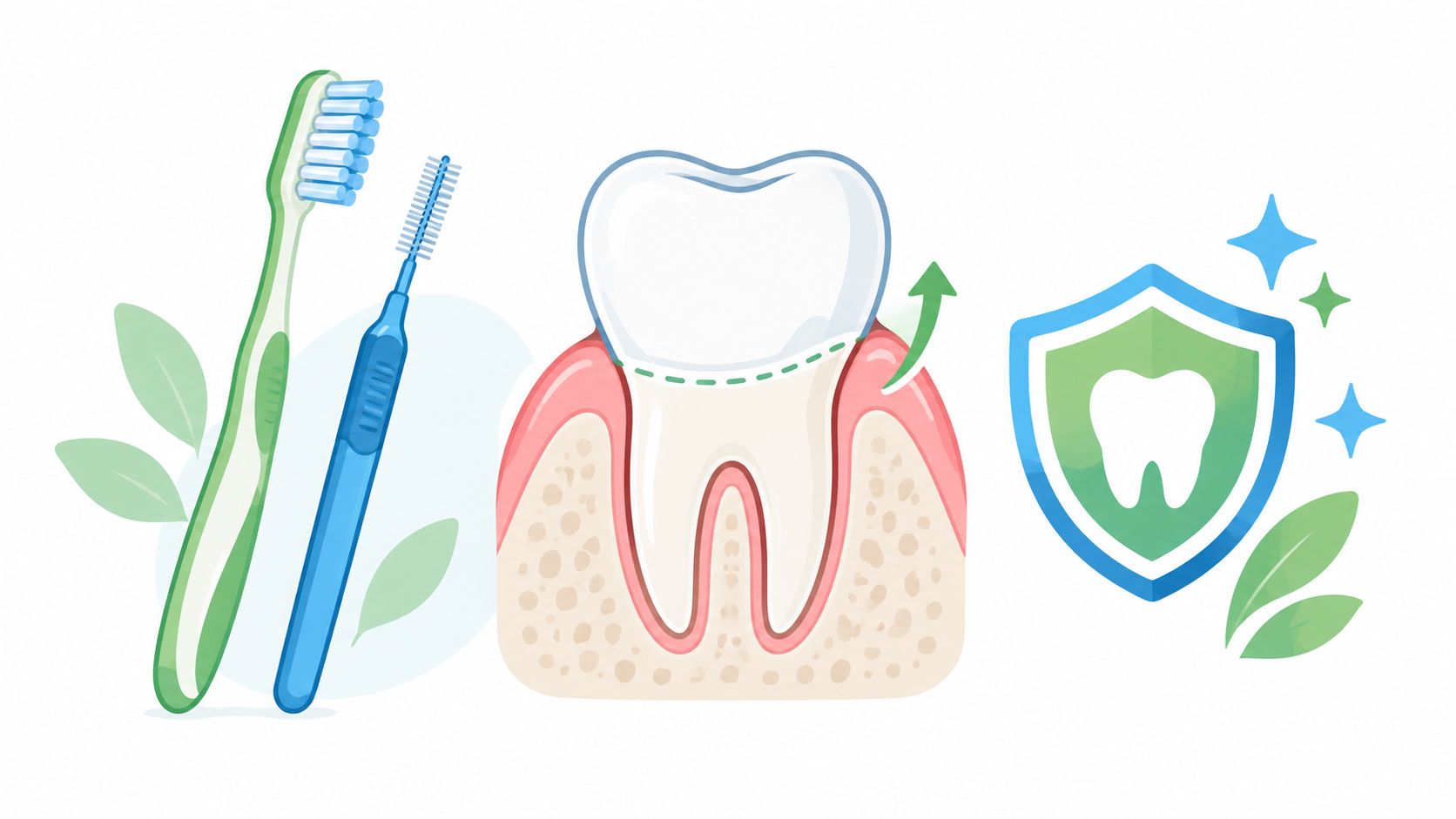
This option is frequently overlooked because it does not look like surgery. Still, it can be the most important step for a patient with shallow recession, stable tissues, and manageable sensitivity. If the recession isn't actively progressing, symptom control and monitoring may be more appropriate than immediate grafting.
Non-surgical treatment also fits patients with multiple recession sites where the main issue is traumatic brushing, inflammation, or plaque retention around restorations. In those cases, fixing the cause can matter more than selecting a material.
Helpful habits usually include gentle brushing, avoiding trauma from oral hygiene tools, stopping smoking if relevant, and keeping periodontal maintenance visits on schedule. For some patients, LANAP may be combined with this disease-control approach when the periodontal picture calls for it.
The limit is clear. Non-surgical care can reduce symptoms and help stabilize the gums, but it does not reliably rebuild lost tissue or fully cover exposed roots. That distinction matters when esthetics or root protection is the main goal.
Gum Graft Alternatives: 7-Method Comparison
| Technique | Implementation complexity | Resource requirements | Expected outcomes | Ideal use cases | Key advantages |
|---|---|---|---|---|---|
| LANAP (Laser-Assisted New Attachment Procedure) | Moderate–High, protocol-driven laser surgery requiring certification | PerioLase MVP‑7 laser, LANAP‑trained periodontist, laser consumables | Promotes periodontal regeneration, reduced recession risk, faster recovery than open grafting (variable by severity) | Moderate recession from periodontal disease; patients who wish to avoid donor‑site surgery | Minimally invasive, no donor tissue, FDA‑cleared protocol |
| Pinhole Surgical Technique (PST) | Moderate, technique‑sensitive soft‑tissue manipulation | Specialized PST instruments, local anesthesia, trained clinician | Rapid root coverage and quick healing when adequate tissue thickness exists; outcome depends on biotype | Multiple recession sites with sufficient gum thickness; cosmetic cases needing fast recovery | No donor site or sutures, minimal trauma, rapid recovery |
| Acellular Dermal Matrix (ADM) Grafting | Moderate, surgical placement of processed human scaffold | Off‑the‑shelf human ADM grafts, single surgical site, periodontist | Predictable scaffold integration and good root coverage for many defects | Patients with inadequate palatal tissue or multiple recession areas | Eliminates palatal harvest, good handling, reduced donor morbidity |
| Coronally Advanced Flap (CAF) with Guided Tissue Regeneration (GTR) | High, flap surgery plus membrane placement and suturing | Surgical instruments, GTR membranes (resorbable/non), skilled surgeon | Promotes true periodontal regeneration and improved attachment; good long‑term stability when tissue allows | Moderate recession with regenerative goals or when attachment/bone fill desired | Uses native tissue, supports regeneration, durable esthetic outcomes |
| Xenogeneic Graft Material (Collagen‑Based Products) | Low–Moderate, simpler handling but requires adherence to manufacturer protocols | Off‑the‑shelf collagen (porcine/bovine), no human donor, can combine with flaps | Provides scaffold that is bioabsorbed and replaced by native tissue; variable coverage vs. autograft | Patients avoiding human tissue or with limited palatal donor tissue; combined procedures | Readily available, lower cost, no human donor tissue, versatile |
| Subepithelial Connective Tissue Grafting (SCTG) with Barrier Techniques | High, dual‑site surgery with palatal harvest and precise placement | Palatal donor harvest tools, suturing, optional GTR membranes, experienced periodontist | Excellent esthetic root coverage and thick tissue with strong long‑term stability | Moderate to severe recession in high‑esthetic zones needing durable coverage | Superior esthetics and root coverage, long‑term stability |
| Non‑Surgical Management & Regenerative Periodontitis Therapy | Low–Moderate, scaling/root planing and adjunctive therapies; requires long‑term follow‑up | Hygiene instruments, antimicrobials/growth factors as needed, regular maintenance appointments, patient compliance | Controls disease, may allow partial reattachment; limited for complete coverage in severe defects | Early recession from active periodontal disease; patients contraindicated for surgery | Non‑invasive, treats underlying cause, lower initial cost, suitable for medically compromised patients |
Choose the Least Invasive Suitable Option
The best gum graft alternatives are not the ones that sound simplest, they're the ones that match the defect. If active periodontal disease is still present, disease control usually comes first. If the goal is root coverage, then tissue repositioning, ADM, collagen-based materials, guided tissue regeneration, or connective tissue grafting may each make sense depending on recession depth, tissue thickness, root shape, and the amount of surrounding support.
Patients should ask a periodontist about the cause of the recession, how much coverage is realistic, whether a donor site is needed, what recovery looks like, how maintenance affects long-term stability, and where the graft material comes from. Those questions matter because the same procedure can be a good fit for one mouth and a poor fit for another. A patient who wants less downtime may still need a more predictable biologic solution if the tissue is thin or the recession is advanced.
Periodontal Associates of Delaware evaluates these choices across its Wilmington, Newark, and Dover offices for adults in New Castle and Kent Counties. When indicated, the practice also uses advanced diagnostics and technology, including LANAP, i-CAT 3D imaging, and X-Nav dynamic navigation, to help match treatment to the anatomy instead of forcing the anatomy to fit the treatment.
Individual results vary, so readers should consult a periodontist before deciding. To discuss gum graft alternatives and find the nearest Wilmington, Newark, or Dover office, request an appointment through Periodontal Associates of Delaware.
Periodontal Associates of Delaware helps patients evaluate gum graft alternatives, gum recession, and periodontal disease with board-certified care across Wilmington, Newark, and Dover. If recession is bothering you, the team can review whether disease control, tissue repositioning, graft substitutes, or regenerative treatment makes the most sense for your mouth. Request an appointment at the nearest office and get a plan that fits your gums, your goals, and your healing needs.