Grinding itself isn't an established direct cause of swollen lymph nodes, and lymph-node enlargement usually reflects infection or inflammation rather than jaw-muscle overuse. The primary concerns to watch for are a dental infection, periodontal abscess, or throat inflammation occurring alongside clenching.
A tender lump under the jaw can feel alarming, especially when it appears after several stressful nights of grinding or waking with a sore jaw. The timing makes bruxism seem like the obvious explanation, but the two symptoms often come from different processes happening in the same general area.
Bruxism overloads muscles, teeth, and jaw joints. A swollen node reflects immune activity in nearby tissues. The practical question isn't only “can grinding teeth cause swollen lymph nodes?” It's whether the node signals an infection that needs attention.
Table of Contents
- What You Might Notice When Grinding Meets a Tender Node
- What Bruxism Actually Does to the Jaw
- Why Lymph Nodes Swell in the First Place
- The Most Common Co-Existing Causes Behind a Tender Node
- Grinding Versus Infection A Quick Symptom Check
- When a Swollen Node Needs Prompt Attention
- How a Periodontal Evaluation Gets to the Source
- Key Takeaways and Your Next Step
What You Might Notice When Grinding Meets a Tender Node
A person may wake with tight jaw muscles, a headache, or tooth tenderness, then notice a small, painful lump beneath the jaw later that day. Because both symptoms are near the face and neck, it's natural to connect them. Grinding teeth isn't typically the direct cause of swollen lymph nodes, however. Nodes more commonly enlarge when nearby teeth, gums, tonsils, throat tissues, or salivary glands trigger an immune response, as described in this evidence review of temporomandibular disorders.
The distinction becomes easier when the symptoms are separated into two categories:
- Mechanical symptoms come from repeated force. These include aching jaw muscles, morning fatigue, tooth wear, headaches, and jaw-joint tenderness.
- Inflammatory or infectious symptoms come from the body responding to a problem nearby. These include a tender node, gum swelling, pus, fever, worsening tooth pain, or facial swelling.
A node may become tender because immune cells are responding to a dental or throat problem. The grinding may be real, but it can act as a red herring, drawing attention away from the condition that actually needs treatment.
Practical rule: Jaw soreness alone often points toward mechanical overload. Jaw soreness plus a new tender node deserves a search for infection or inflammation.
A swollen node doesn't prove that a tooth is infected. Viral illness and other conditions can also enlarge neck nodes. Still, a new lump shouldn't automatically be blamed on bruxism, particularly when oral symptoms are present.
What Bruxism Actually Does to the Jaw
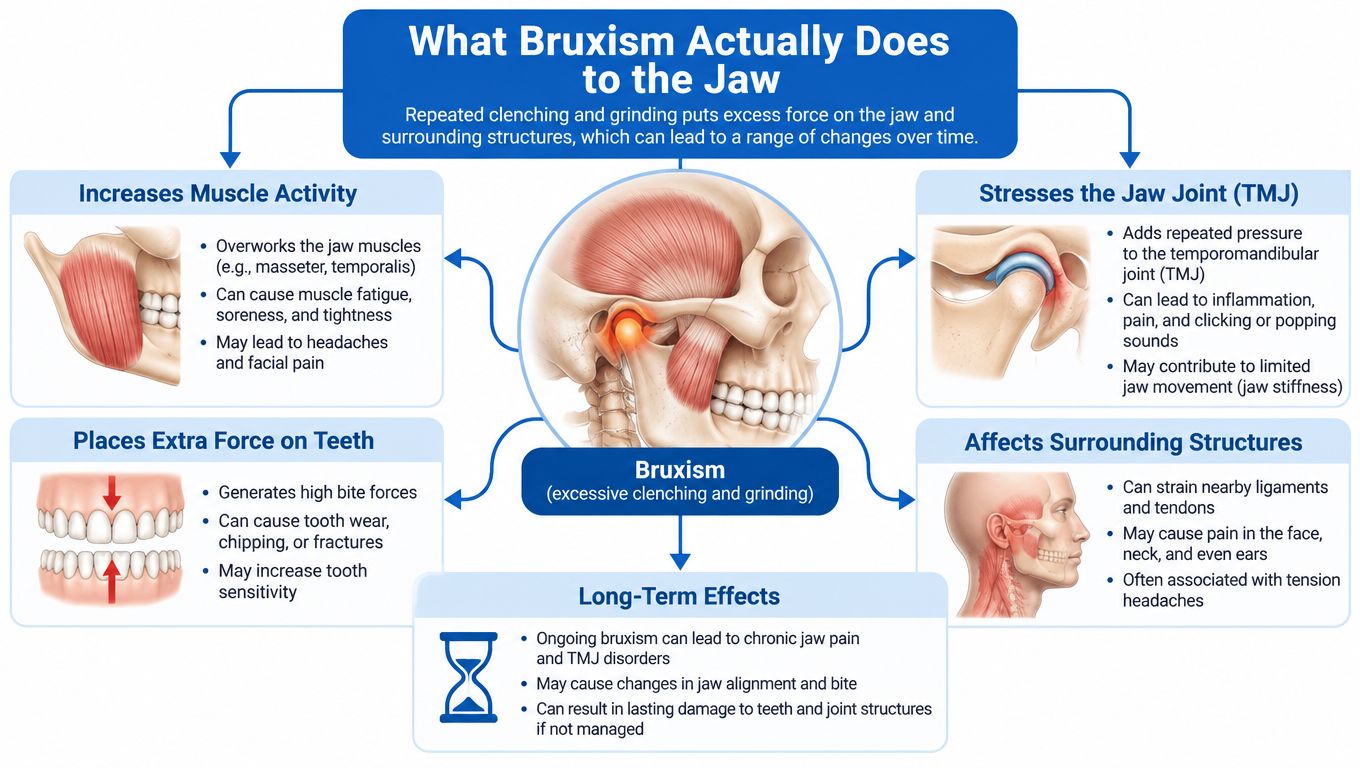
Bruxism means repeated clenching, grinding, or forceful contact between the teeth. A useful comparison is pressing a weight against a joint again and again during sleep. Each individual episode may seem minor, but the repeated load can irritate the structures that absorb it.
The masseter and temporalis muscles may become sore, tight, or enlarged from overuse. The temporomandibular joints can develop tenderness, clicking, or pain with chewing. The periodontal ligaments, which cushion each tooth inside its socket, may also become sensitive when a person repeatedly bites with excessive force.
Common mechanical signs include:
- Morning jaw fatigue, especially after restless sleep or stressful periods.
- Tooth sensitivity, soreness when biting, or discomfort around one or more teeth.
- Flattened, chipped, or worn teeth, sometimes with damage to fillings or crowns.
- Headaches on waking, often felt near the temples or forehead.
- Jaw-joint clicking or tenderness, with discomfort when opening widely.
- Tender chewing muscles, particularly when the masseter is pressed.
The relationship between bruxism and jaw disorders has clinical support. A 2023 systematic review and meta-analysis of 20 eligible studies found that bruxism was associated with 2.25-times higher odds of temporomandibular disorders, with a 95% confidence interval of 1.94 to 2.56 (systematic review and meta-analysis). The finding supports a connection between grinding and musculoskeletal jaw problems. It doesn't show that grinding enlarges lymph nodes.
Why the distinction matters
Muscles respond to force by becoming fatigued and tender. A lymph node responds to signals from the immune system. Those systems are connected through the body, but ordinary mechanical pressure doesn't usually activate the immune response that makes a node swell.
Grinding can still contribute indirectly to a dental problem. A cracked tooth, irritated gum, or damaged restoration may become vulnerable to bacterial infection. In that situation, the node enlargement would be more consistent with the infection, not with the grinding force itself. Readers concerned about the connection between bruxism and gum changes can review this guide to teeth grinding and receding gums.
Why Lymph Nodes Swell in the First Place
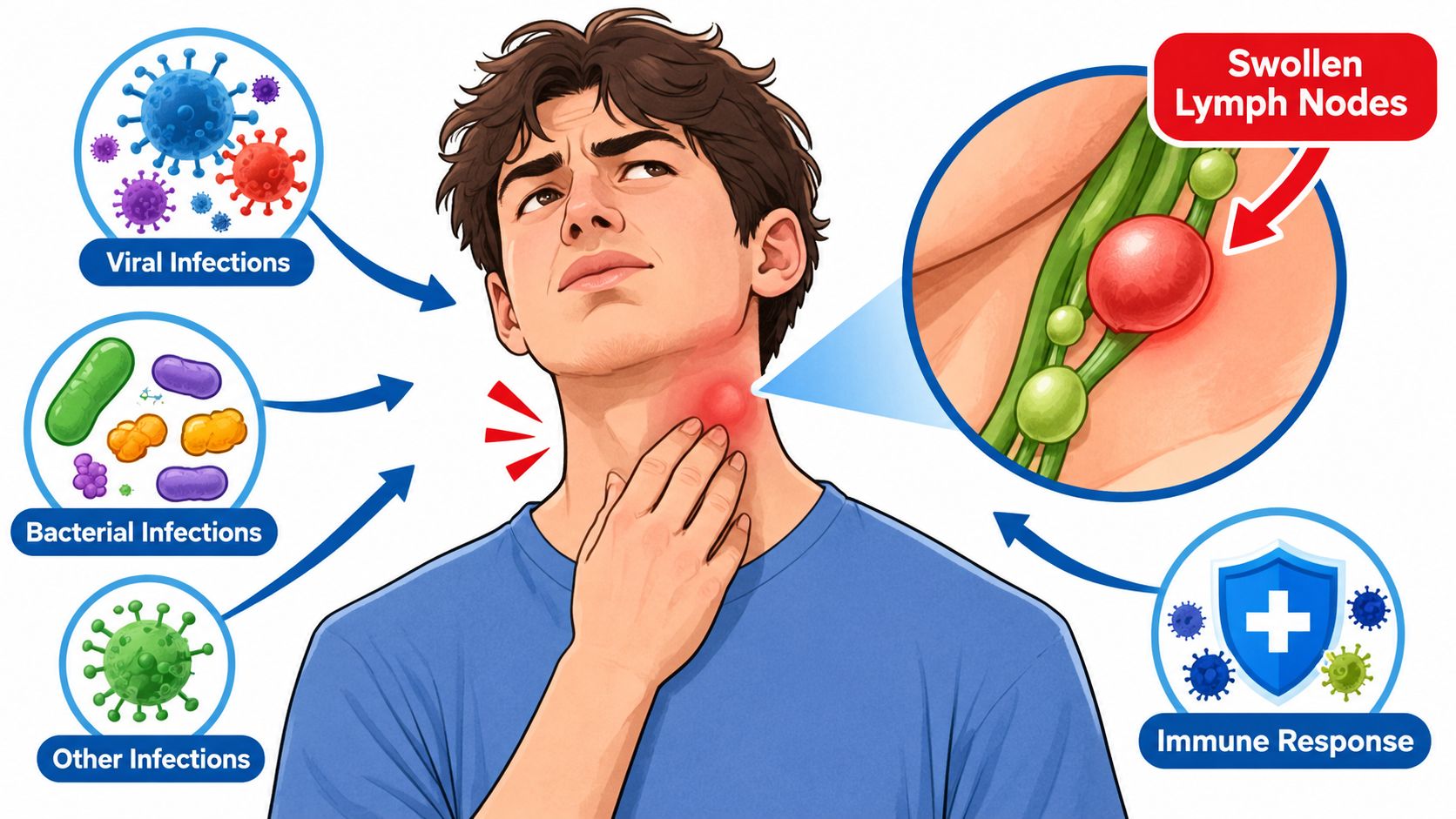
Lymph nodes work like neighborhood watch stations. They filter lymph fluid and house immune cells that monitor nearby tissues. When those cells detect signs of infection or inflammation, the node may become larger, tender, or more noticeable.
Nodes beneath the jaw and along the upper neck drain areas that include the mouth, teeth, gums, tonsils, throat, and nearby structures. That location explains why an abscessed tooth or sore throat can produce a lump in the neck. The node isn't usually reacting to the jaw muscle itself. It's reacting to signals from tissue in its drainage area.
Bruxism creates mechanical stress, not usually an infectious signal. That's why clenching alone generally doesn't give cervical lymph nodes a reason to enlarge. A node that appears after grinding may be coincidental, or the grinding may be occurring alongside another condition.
Common immune triggers near the jaw
Several problems can activate nodes in this region:
- Viral illnesses, including upper-respiratory infections.
- Strep throat or other throat inflammation, particularly when swallowing hurts.
- Dental abscesses, which may arise inside a tooth or around its root.
- Periodontal infections, especially when deep gum pockets trap bacteria.
- Salivary-gland problems, which may cause swelling near the jaw or cheek.
The location of a node can offer a clue, but it can't establish a diagnosis. A clinician must consider the node's texture, movement, duration, associated symptoms, and the condition of the mouth and throat.
The Most Common Co-Existing Causes Behind a Tender Node
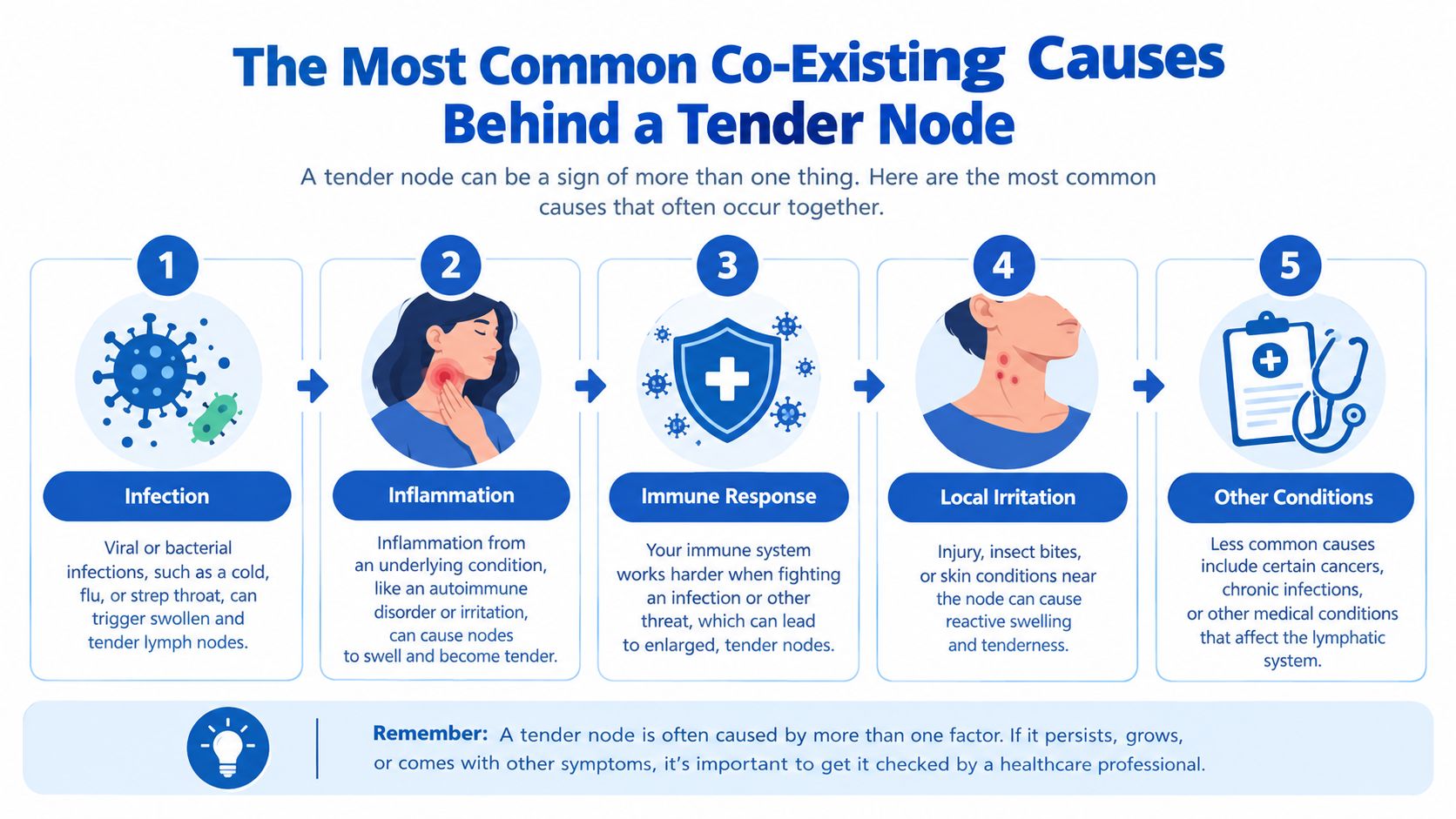
A tender node below the jaw or in the upper neck is more compatible with nearby inflammation than with uncomplicated bruxism. Dental causes deserve particular attention because an infected tooth or gum pocket can drain toward the cervical lymph nodes.
An abscessed tooth may follow decay, a crack, or infection inside the root. Common accompanying signs include throbbing pain, pain that radiates toward the jaw or neck, sensitivity when biting, facial or jaw swelling, and a bad taste if drainage reaches the mouth. Cleveland Clinic lists swollen lymph nodes among possible symptoms of an abscessed tooth.
A periodontal abscess starts in infected gum tissue, often near a deep periodontal pocket. The gum may become swollen and tender, and pressure can produce pus or an unpleasant taste. Advanced gum disease can create localized infection even when the tooth itself doesn't have a cavity or root infection. Information about this condition is available in the guide to periodontal gum abscesses.
Other nearby sources
Not every tender node comes from a tooth. Tonsillitis can inflame tissues that drain into the neck. A sinus infection may create facial pressure and referred dental discomfort. A viral upper-respiratory illness can cause congestion, throat irritation, and swollen nodes at the same time.
Stress, illness, and disrupted sleep may also increase clenching. That overlap can make the symptoms seem connected even when the node is responding to a separate infection. A dental or medical examination can sort out whether the main problem involves a tooth, gum tissue, throat, sinus area, or salivary gland.
Dental infections may produce more than local discomfort. If infection advances, bacteria and inflammatory material can spread into surrounding tissues. That possibility makes worsening swelling, fever, or difficulty opening the mouth more important than the presence of grinding alone.
Grinding Versus Infection A Quick Symptom Check
A side-by-side review can help a person decide how quickly to seek care. It can't replace an examination, but it can prevent two common mistakes: treating an infection as “just grinding” or assuming every sore jaw means an abscess.
| Symptom | More Likely Bruxism | More Likely Infection |
|---|---|---|
| Jaw discomfort | Diffuse soreness or morning fatigue in the chewing muscles | Pain focused near a tooth, gum, or swollen area |
| Tooth symptoms | General sensitivity, wear, or small chips | Worsening pain, pain with biting, or a bad taste |
| Jaw joint | Clicking or tenderness with movement | Reduced opening caused by swelling or severe pain |
| Visible changes | Flattened tooth surfaces without gum or facial swelling | Gum swelling, pus, draining sore, or facial swelling |
| Whole-body signs | Usually no fever | Fever, feeling unwell, or chills may occur |
| Neck findings | No new lump is typical | A tender, enlarging, or firm node may appear |
Grinding-related discomfort often feels spread across both sides of the jaw. The masseter muscles may hurt when pressed, and the teeth may feel tired after waking. A person may also notice temple headaches or clicking without any fever, oral swelling, or new neck lump.
An infection tends to declare itself through a more focused pattern. One tooth may throb. A gum area may swell. Biting may trigger sharp pain, or pus may appear beside a tooth. The jaw or face may look swollen, and the node may become tender on the same side.
A person doesn't need to identify the exact cause at home. The useful step is recognizing when the symptoms no longer fit simple muscle overload.
Grinding plus diffuse soreness, without fever or oral swelling, may justify discussion of bruxism treatment and bite protection. Grinding plus worsening tooth pain, gum swelling, pus, fever, facial swelling, reduced mouth opening, or a tender node should prompt dental assessment. A medical visit may also be appropriate when throat or respiratory symptoms dominate.
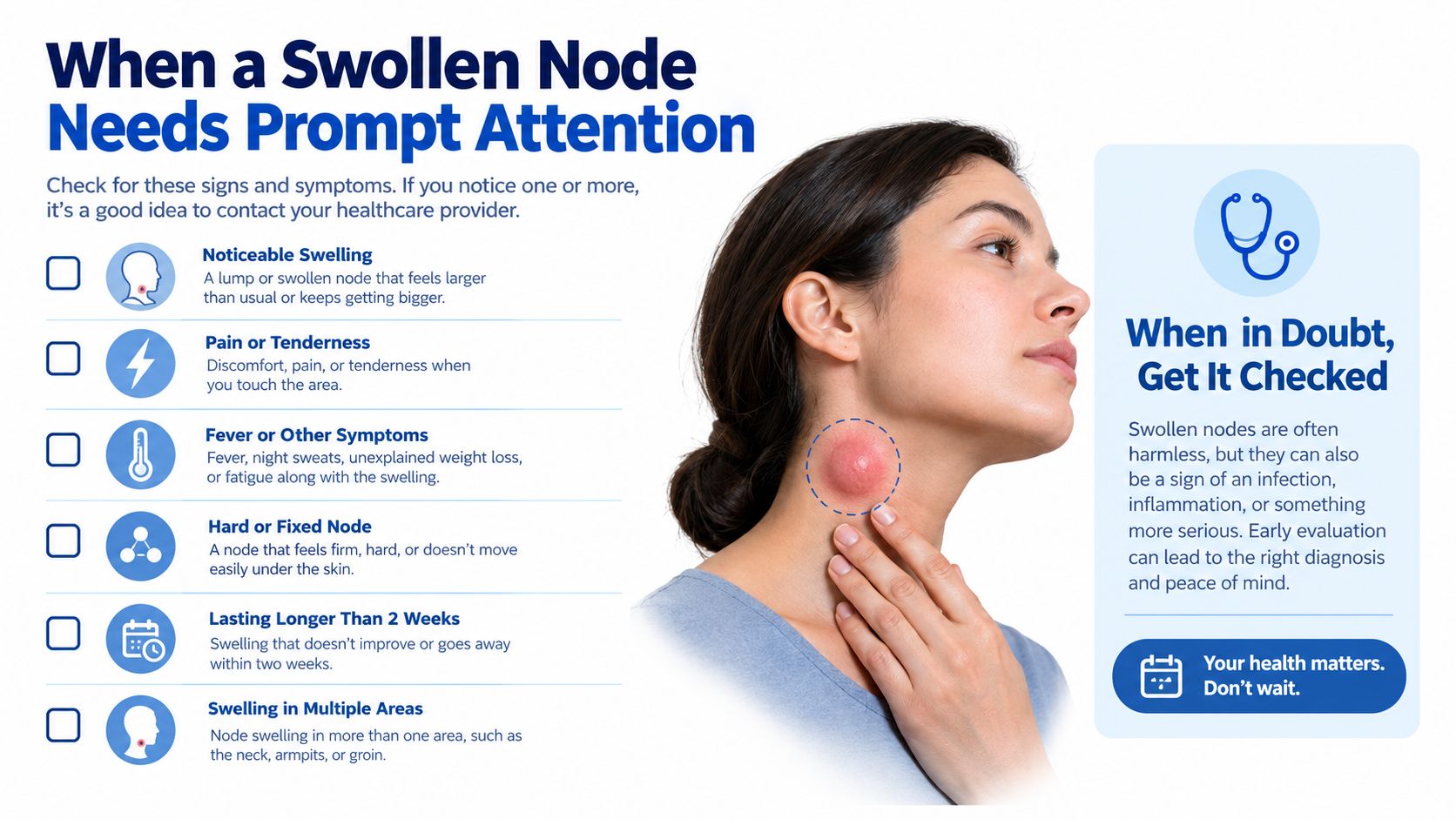
When a Swollen Node Needs Prompt Attention
Some lymph nodes are tender for a short time during a minor infection and then become less noticeable as the cause improves. That pattern can be reassuring, but it shouldn't lead someone to ignore symptoms that are progressing or unexplained.
Same-day emergency evaluation is appropriate for signs that could indicate a spreading dental or deep-neck infection:
- Breathing trouble, especially with neck or floor-of-mouth swelling.
- Difficulty swallowing, drooling, or a new voice change.
- Rapidly spreading facial or neck swelling.
- Marked trismus, meaning severe difficulty opening the mouth.
- Fever with worsening dental pain or swelling.
- A rapidly enlarging, very painful area beneath the jaw.
Odontogenic infections can spread through fascial planes into deep neck spaces, where airway compromise and serious systemic infection may occur. This is why clinical guidance on dental infections treats progressive swelling and airway-related symptoms as reasons for prompt evaluation.
Important signs that still need evaluation
A node doesn't have to be an emergency to deserve professional attention. Medical or dental assessment is important when a node is firm, fixed, above the collarbone, larger than approximately 2 centimeters, or present beyond two to four weeks. A node that continues growing or has no clear cause also needs evaluation rather than indefinite observation.
A single tender node that softens as a confirmed dental infection improves may follow a reactive pattern. That doesn't remove the need to treat the original infection. Persistent or atypical lymphadenopathy can have infectious, inflammatory, or other causes, so an examination is the safer path.
How a Periodontal Evaluation Gets to the Source
A periodontal visit begins with the symptom story. The clinician asks when the lump appeared, whether it's changing, which tooth or gum area hurts, whether chewing triggers pain, and whether fever, drainage, or facial swelling is present.
The mouth is then examined systematically. A clinician may tap or press suspect teeth to identify percussion sensitivity, inspect for cracks and drainage, and measure the gumline for recession. Periodontal probing helps identify deep pockets, bleeding, and localized infection. Tooth stability is also checked because mobility can reflect loss of supporting bone or acute inflammation.
When the source isn't visible, i-CAT 3D cone beam imaging may help show bone levels, root structure, jaw anatomy, or a hidden area of infection. Imaging supports the examination rather than replacing it. If a tooth can't be saved and implant replacement becomes appropriate, X-Nav dynamic surgical navigation can assist with detailed implant planning.
Treatment depends on the diagnosis. Non-surgical periodontal therapy may be appropriate for some gum infections. Other cases may require LANAP laser gum surgery using the FDA-cleared PerioLase MVP-7, traditional periodontal surgery, treatment for a tooth-related infection, or another clinically appropriate procedure. No specific treatment or outcome should be assumed before the examination.
Information about tooth movement and supporting structures is available in this resource on mobility of teeth. Periodontal Associates of Delaware provides periodontal and implant evaluation across its Wilmington, Newark, and Dover offices, serving adults throughout New Castle and Kent Counties, including Pike Creek, Hockessin, Bear, Middletown, and surrounding communities.
Key Takeaways and Your Next Step
Grinding alone rarely causes swollen lymph nodes. It more often produces mechanical symptoms such as sore chewing muscles, tooth wear, morning headaches, sensitivity, or jaw-joint tenderness.
A tender node alongside worsening tooth pain, gum swelling, pus, fever, facial swelling, or reduced mouth opening is a reason to look for infection rather than blaming bruxism. A firm, fixed, enlarging, unexplained, or persistent node also deserves medical or dental evaluation. Breathing difficulty, swallowing problems, drooling, voice changes, floor-of-mouth swelling, or rapidly spreading swelling require urgent care.
Individual results vary, and only an examination can identify the source with confidence. Early evaluation is often the clearest way to separate manageable muscle overload from a dental or medical problem that needs treatment.
For adults in Wilmington, Newark, Dover, and nearby Delaware communities, Periodontal Associates of Delaware offers periodontal evaluations, gum infection care, LANAP with the FDA-cleared PerioLase MVP-7, and implant planning supported by i-CAT 3D imaging and X-Nav navigation. Readers with a swollen node, gum symptoms, or uncertainty about whether grinding is masking an infection can request an appointment at the nearest Wilmington, Newark, or Dover office.