Everyday recovery after sinus augmentation usually feels much better in 2 to 3 weeks, but the grafted bone still needs about 3 to 6 months to mature before implants are placed. That gap is why someone can feel mostly normal long before the surgical site is fully ready.
The first few days can feel unsettling because the face looks puffy, the mouth feels tender, and the instructions about avoiding pressure can seem stricter than expected. A clear recovery map helps, especially when the central question is not just “Does it hurt less yet?” but “Is the graft healing the way it should?”
Table of Contents
- Understanding Your Sinus Lift Recovery Journey
- The First Week After Sinus Augmentation
- Managing Diet and Daily Activities Safely
- Why Bone Graft Integration Takes Months
- Recognizing Normal Healing Versus Complications
- Your Post-Surgery Recovery Checklist
Understanding Your Sinus Lift Recovery Journey
A patient can leave the office relieved, then spend that evening wondering whether the swelling, congestion, and soreness are normal. That reaction is common. Sinus augmentation recovery has two timelines running at once, what you feel on the outside and what the graft is doing underneath. The visible symptoms usually ease first, while the graft continues to mature in the jaw.
What patients feel versus what the graft needs
The first phase is about comfort, swelling, and protecting the surgical site from pressure. The biologic phase is slower, because the graft has to integrate and stabilize before it can support an implant. A major NHS hospital guide says swelling is usually worst after 2 days, stitches come out in about 10 days, and most patients feel back to normal in 2 to 3 weeks. It also notes that bone integration often takes about 3 to 6 months, and some complex cases wait 6 to 9 months before implant placement (NHS patient guidance on sinus lift procedures).
That gap matters because daily comfort and graft maturity are not the same thing. Someone may return to work, eat more comfortably, and barely think about the surgery day to day, while the graft is still remodeling below the surface. A patient often feels recovered before the site is ready for the next step.
A practical rule helps here. Feeling better is encouraging, but it does not mean the area can take implant loading.
For families across Wilmington, Newark, Dover, and nearby communities, that distinction often lowers anxiety. It also explains why follow-up appointments continue after the stitches are removed. The sinus augmentation cost resource can help readers understand how healing visits fit into overall treatment planning.
Why the timeline is longer than the symptoms
A calm-looking surgical site can still be changing underneath. The surface may feel settled while the graft is continuing to knit into surrounding bone, which is why clinicians keep checking progress over time. One patient may feel nearly back to normal within days, then learn at a follow-up visit that the bone still needs more time before implant placement. That is frustrating for some people, but it is also a normal part of staged healing.
Periodontal Associates of Delaware may use imaging and scheduled checks to track that process across the months, not just the first week.
The First Week After Sinus Augmentation
The first week is often the part patients worry about most. Swelling, bruising, and mild bleeding are usually most noticeable then, and that can feel alarming if you expected the area to look calm right away. The early symptoms usually follow a familiar pattern, but the harder part is knowing which changes belong to normal healing and which ones should prompt a call to the Wilmington, Newark, or Dover office.
A simple day-by-day picture
On day 1, numbness can linger as the anesthetic fades, and the cheek or under-eye area may begin to swell. By day 2, swelling is often at its highest, which fits the usual healing pattern described in patient guidance on sinus lift procedures. Mild bleeding, a little congestion, and pressure in the face can also show up early.
By the end of the first week, many patients notice that discomfort is easier to control and swelling is starting to settle. Stitches are often still in place until around the 10-day mark, so it helps to avoid pulling at the area or rinsing forcefully. The home-care rules are there to reduce pressure, not to make recovery more complicated.
What to do at home
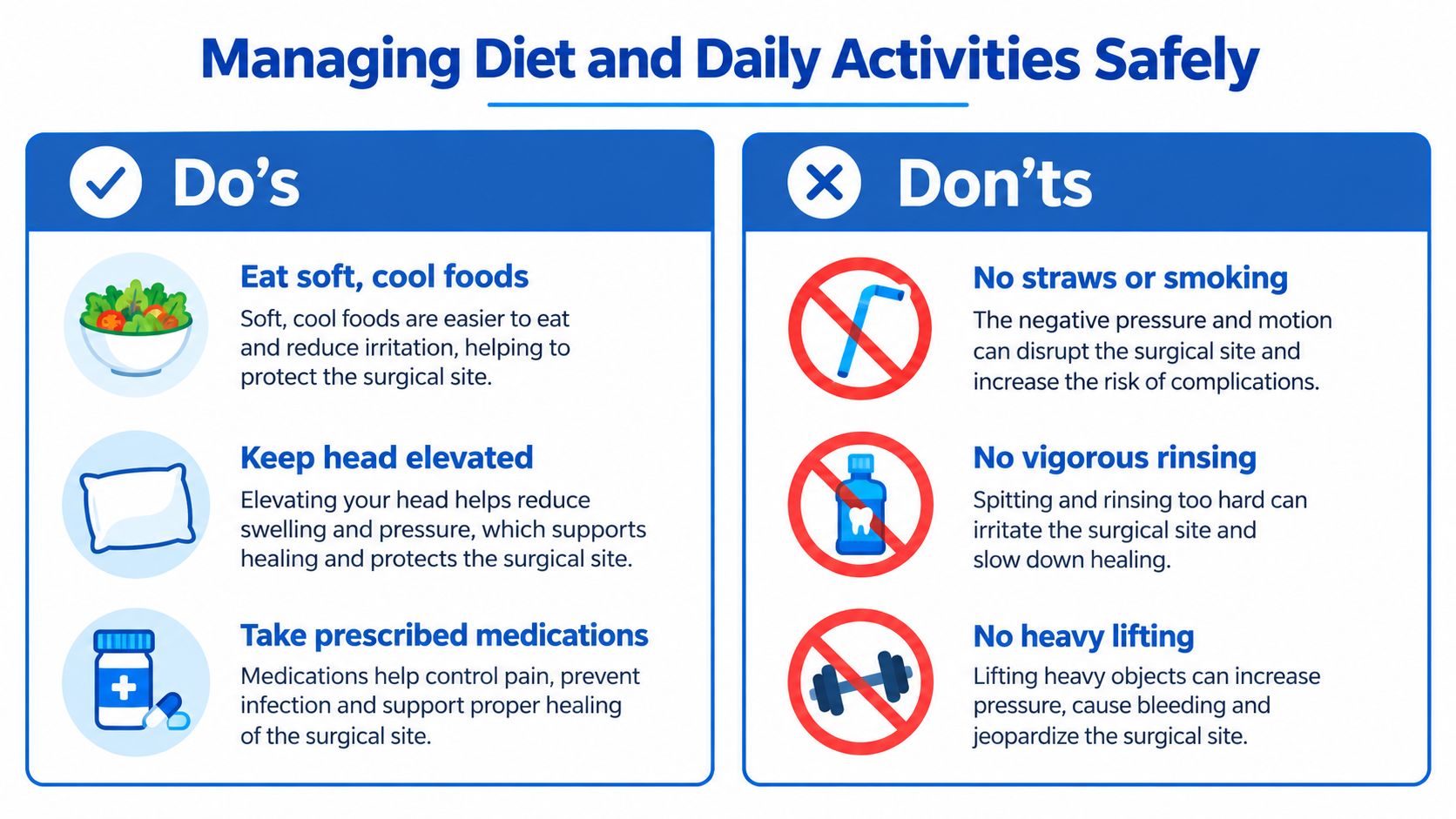
Home care should focus on protection, not heroics. Soft, cool foods, head elevation, prescribed medication, and gentle oral hygiene all help keep the first week calmer. The goal is simple, protect the graft from pressure, heat, and trauma while the body begins building new bone around it.
Keep the area calm. If something increases pressure, strain, or force, it is probably not a good idea yet.
McGill University's Oral Surgery guidance notes that patients should avoid pressure-building activities for at least 1 week, including heavy exercise, smoking, air travel for at least 2 weeks, and wind instruments (McGill oral surgery guidance). That advice lines up with standard post-op care, because the sinuses and the graft site both need time to settle without added stress.
A patient who is unsure whether a symptom is routine should watch the direction it is moving, not just the moment. Swelling should peak and then ease. Pain should be manageable, not intensifying. If symptoms move the wrong way, or if you are unsure how your recovery compares with what should happen next, use the appointment request page to ask about healing concerns.
Managing Diet and Daily Activities Safely
Eating and moving normally sound simple until the mouth is trying to heal under a sinus cavity. The practical goal is to keep life moving without creating suction, pressure, or strain near the graft. That means the rules are temporary, but they're specific for a reason.
Food choices that protect the site
Soft foods are usually safest at first, especially foods that don't need much chewing. Cool or lukewarm choices tend to be easier on the surgical area than hot, crunchy, or sticky foods. A patient doesn't need to eat perfectly, just carefully enough to avoid irritating the graft site.
Activity limits that make sense
Some activities create sinus pressure, and pressure can disturb healing. A university oral surgery source recommends avoiding unnecessary sinus pressure for at least 1 week, including heavy exercise, smoking, air travel for at least 2 weeks, and wind instruments (McGill oral surgery guidance). Another post-op instruction set also warns against heavy lifting and vigorous activity because they can increase bleeding risk and disrupt healing.
A practical approach is to think in layers. Light daily tasks may be fine once the office says they are, but workouts, lifting, and pressure-heavy habits should wait until the healing plan allows it. That's especially important if the patient is used to pushing through discomfort, because sinus surgery rewards patience more than grit.
Why the restrictions matter
The graft sits beneath a delicate membrane, and pressure changes can irritate that area before it has stabilized. Even habits that seem harmless, like bending hard or trying to clear the nose forcefully, can create problems early on. That's why recovery instructions often sound repetitive, they're trying to protect a site that's still fragile.
Practical rule: if the activity forces air, pressure, or strain into the face, it belongs on the restricted list for now.
For patients at Periodontal Associates of Delaware, this is also the stage when home instructions and office follow-up work together. The goal isn't to limit life forever, it's to keep the graft safe long enough for the biology to catch up.
Why Bone Graft Integration Takes Months
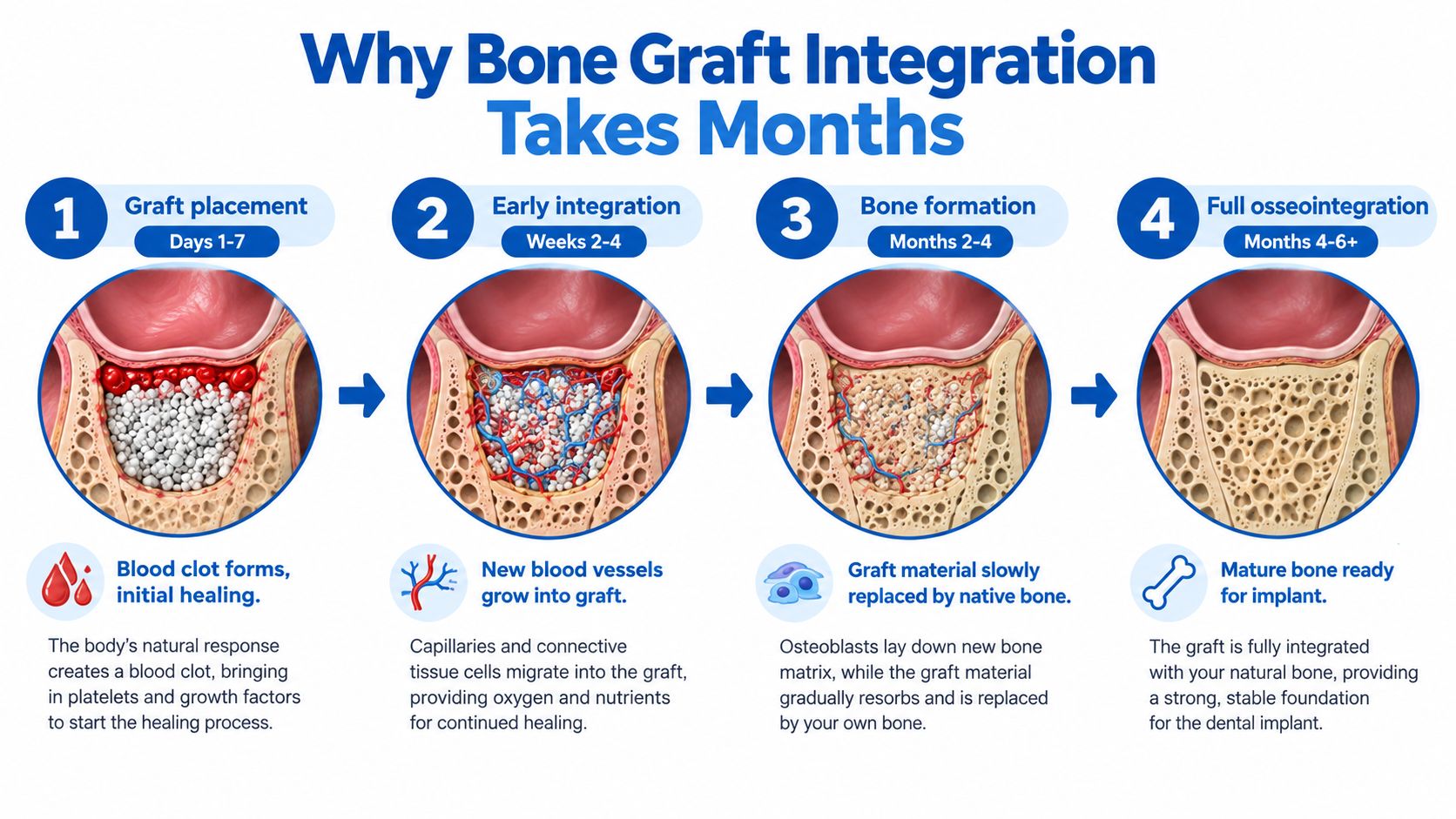
The part that surprises many patients is that the mouth can feel settled while the graft is still changing underneath. Swelling drops, soreness fades, and normal daily routines start to feel easier, but that does not mean the bone has finished maturing. Early comfort and graft readiness move on different timelines.
The healing clock runs in months
Review data describe average healing times of about 6 to 9 months, with 6 months often used for autogenous or allogeneic grafts and longer intervals for xenogeneic or synthetic substitutes (review data on graft healing). The American Academy of Periodontology says bone is commonly allowed to develop for 4 to 12 months before implants are placed, depending on the case (AAP patient guidance on sinus augmentation).
That range reflects how much planning depends on the details of the surgery. A smaller, simpler site may mature on a different timeline than a more complex one. The goal is to wait long enough for the graft to become stable, not just to wait for symptoms to settle.
Material choice can change stability
The graft material also affects how the site behaves over time. A systematic review found better graft stability when autogenous bone was mixed with xenograft than when autogenous bone was used alone (systematic review on graft stability). That does not mean one mix is right for every patient. It means the healing path depends on the material chosen, the surgical approach, and the shape of the sinus and surrounding bone.
Periodontal Associates of Delaware may use i-CAT 3D cone beam imaging and X-Nav dynamic surgical navigation when planning implant-related care, which helps the team match the procedure to the anatomy more precisely.
Comfort is not the finish line
Pain is only one signal, and it is often the least useful one for judging graft maturity. A patient may feel close to normal while the deeper bone work is still underway. That is why follow-up is based on symptoms and imaging together, rather than on how the mouth feels on a single good day.
Healing after sinus augmentation can be a bit like concrete setting. The surface may look ready before the structure is fully strong. That gap between feeling recovered and being biologically ready is the reason patience matters in this phase.
Recognizing Normal Healing Versus Complications
A lot of stress after sinus surgery comes from uncertainty, not pain. Patients often know something feels different, but they do not know whether it belongs to normal recovery or needs a call. The safest approach is to watch the direction of symptoms, not just whether they are present.
Normal signs that usually improve
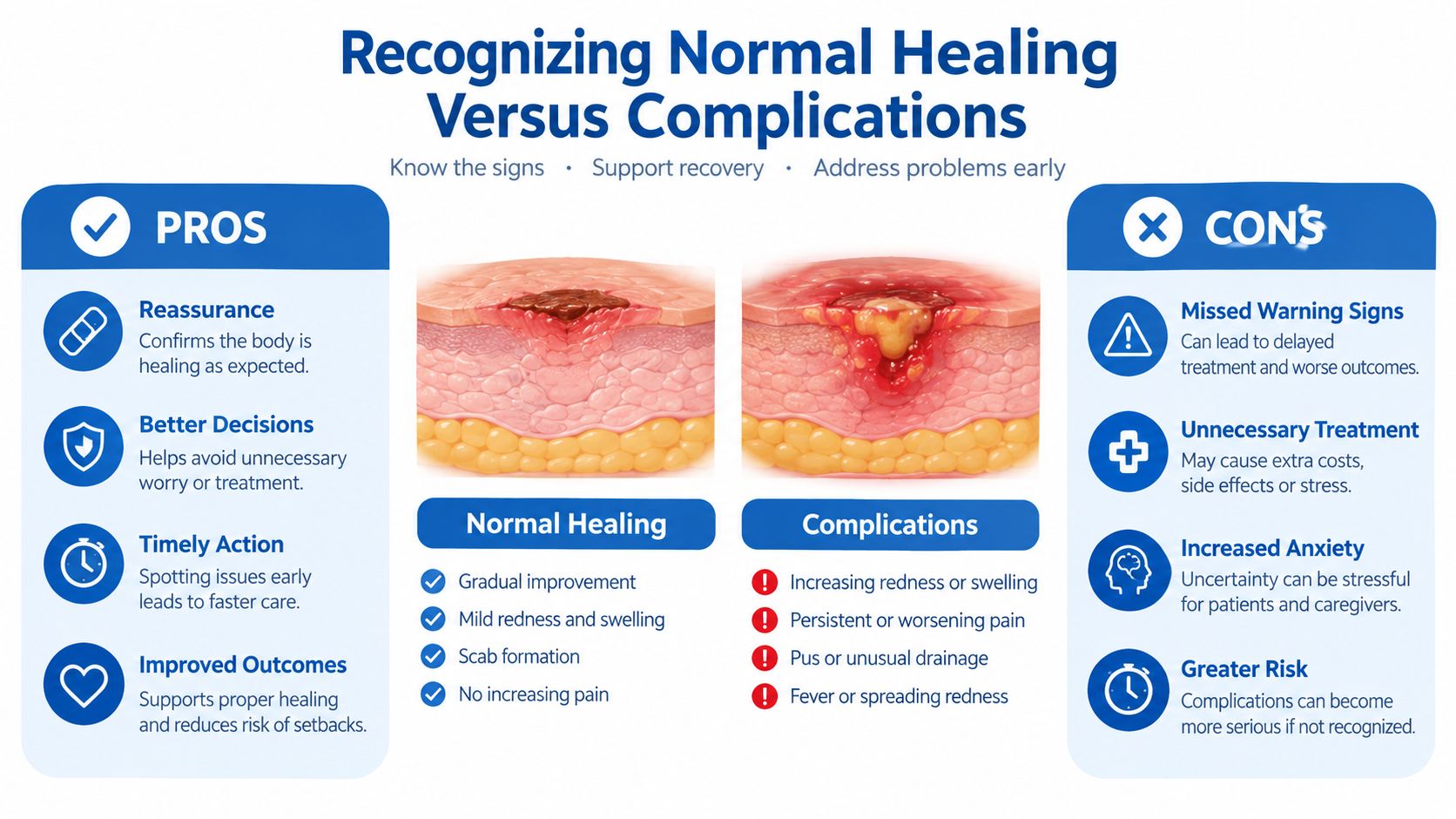
Early healing can bring swelling, bruising, discomfort, mild congestion, and a small amount of blood-tinged drainage. Those symptoms usually peak first, then settle. Healing after sinus augmentation can feel a lot like a bruise fading, the surface changes first, while the deeper tissue is still rebuilding.
A review of complications shows that temporary problems do happen after sinus lift procedures, even when the overall course is uncomplicated. In a review of 1,757 sinus augmentation surgeries, 363 complications were reported, including 242 membrane perforations, 26 sinusitis cases, 24 sinus infections, and 29 partial or total graft losses (complication review). That is why mild early symptoms are not the main issue. The trend over time matters more.
Red flags that need evaluation
The warning pattern is different. Pain that keeps rising, fever, foul odor or taste, swelling that gets worse, or drainage that does not improve can point to infection, graft problems, or delayed sinus issues. The same concern applies if a patient feels mostly fine but notices new pressure, a bad smell, or a change in nasal symptoms after initial improvement.
A postoperative review also notes that edema, ecchymosis, epistaxis, tenderness, and pain may appear after surgery, but persistent swelling with escalating pain, fever, or foul odor should lead to professional review rather than reassurance alone (expert consensus on postoperative signs). Symptom clusters matter. Improving pain with fading swelling usually fits healing, while symptoms that intensify or change direction deserve attention.
Practical rule: improving symptoms usually fit recovery, worsening symptoms usually deserve a call.
That gap between feeling better and actual graft maturity is the part that often surprises patients. The mouth may feel close to normal before the bone work is fully stable. On that point, patient judgment should give way to a periodontist's evaluation.
Your Post-Surgery Recovery Checklist
A good recovery plan is simple enough to follow on a tired day. Keep the focus on protection, symptom trends, and follow-up, not on forcing a faster timeline. If questions come up about coverage or office logistics, the practice's insurance information can help with the practical side of planning.
Use this checklist during the first weeks
- Take medications exactly as prescribed. Staying ahead of discomfort makes it easier to rest and protect the site.
- Choose soft foods early on. Chewing less lowers strain on the surgical area.
- Keep your head raised when resting. This can help reduce pressure and swelling.
- Avoid straws, smoking, and vigorous rinsing. Those habits can disturb healing.
- Skip heavy lifting and hard exercise for now. Strain can increase bleeding and pressure.
- Watch symptoms day by day. Improvement is the goal, not just "getting by."
- Keep follow-up visits. Healing should be checked over time, not guessed at home.
If swelling, pain, odor, fever, or bleeding gets worse instead of better, the office should hear about it promptly. Individual results vary, and patients should consult a periodontist if anything feels off.
Periodontal Associates of Delaware provides periodontal and implant-related care across Wilmington, Newark, and Dover, including sinus augmentation, imaging, and surgical planning for patients who need bone support before implants. If recovery questions are getting in the way of next steps, visit Periodontal Associates of Delaware and request an appointment at the nearest Wilmington, Newark, or Dover office.