CDT code D4910 is the American Dental Association's code for periodontal maintenance, supportive care after active periodontal therapy that continues at clinically determined intervals for the life of the natural teeth or any implant replacements. It doesn't set a fixed schedule after treatment, and an insurance plan's payment limits don't determine when care is clinically appropriate.
The most popular advice, “just get a cleaning every six months,” doesn't fit everyone who has had gum disease. A maintenance visit may look like a cleaning, but its purpose is to monitor and manage a treated periodontal condition, with timing based on the patient's findings and risks. Knowing the difference can help explain why a periodontist may recommend visits more often than an insurance plan covers.
Table of Contents
- What CDT Code D4910 Covers
- How D4910 Differs from a Routine Cleaning
- Clinical Components of a D4910 Visit
- Recommended Visit Frequency and Scheduling
- Why Long-Term Maintenance Protects Teeth
- Documenting D4910 for Clinical and Claim Records
- Insurance Frequency Rules and Referral Implications
- Quick Reference for D4910 Terms and Rules
- Choosing Maintenance Care and Taking the Next Step
What CDT Code D4910 Covers
A D4910 visit follows active periodontal treatment and supports continued care for the treated condition. The ADA describes it as care provided at intervals based on clinical need, potentially throughout the life of natural teeth or implant replacements (ADA guidance on D4910). In practice, the clinician uses each visit to assess the gums and manage areas that need attention.
Care may include removing plaque and calculus above and below the gumline, site-specific scaling and root planing when indicated, and polishing. The clinician also checks periodontal health and plaque control. If the examination finds new or recurring disease, further diagnostic or treatment procedures may be appropriate.
Why the definition matters
The code identifies a procedure and its clinical purpose. It does not set a universal appointment schedule or guarantee that an insurance plan will reimburse every visit. The ADA states that D4910 does not require a specific waiting period after scaling and root planing or periodontal surgery.
This distinction helps explain why a recommended visit date and a covered visit date may differ. A clinician bases timing on the patient's condition and findings. An insurer may apply payment limits under its own benefit rules; those limits govern coverage, not the clinical decision.
Earlier code wording included terminology referring to a periodontal evaluation. That phrasing could suggest that a separate evaluation defined the maintenance visit. The current definition centers on continuing care after periodontal treatment, with the clinician's assessment guiding what the patient needs at each appointment.
What the code is meant to represent
D4910 records that a patient has had active periodontal treatment and continues to receive care for the condition. Treatment history explains why maintenance is being provided; the current examination helps determine what happens during the visit. Even when the gums look calmer, the clinician checks whether the tissues remain stable and whether deposits or inflammation need attention.
For example, two patients with a history of periodontal treatment may have different findings at a follow-up. One may need routine supportive care, while another may need attention to a specific area. The code identifies the continuing-care purpose, while the examination shapes the care delivered.
How D4910 Differs from a Routine Cleaning
Two patients can receive similar cleaning steps while needing different types of care. A routine prophylaxis is preventive care for a patient who does not need ongoing management after active periodontal treatment. D4910 is used for continuing care after treatment for periodontitis. The instruments may overlap, but the purpose of the visit and the patient's clinical history guide the distinction.
| Routine prophylaxis | Periodontal maintenance |
|---|---|
| Preventive cleaning for a patient whose care does not involve post-treatment periodontitis management | Supportive care after active periodontal treatment |
| Focuses on routine deposit removal and prevention | Includes periodontal assessment and attention to areas at risk of recurrence |
| Does not describe a history of treated periodontitis on its own | Is informed by periodontal history and current clinical assessment |
A maintenance visit may include cleaning around and below the gumline, evaluating periodontal pockets, and reviewing the patient's plaque control at home. Supportive periodontal care combines preventive and therapeutic interventions based on current periodontal status, as outlined in this overview of periodontal maintenance and routine prophylaxis.
Consider two people in the same chair receiving similar polishing. One has a history of treated periodontitis and needs ongoing monitoring; the other receives preventive care without that treatment history. Their visits may look alike, yet their clinical context differs. The code follows that context and the current assessment, while an insurance plan's coverage rules are a separate administrative matter.
Feeling better doesn't automatically change the care category
Less bleeding or tenderness is encouraging, but those symptoms alone do not determine whether routine prophylaxis is appropriate. The clinician weighs findings such as bleeding, pocket depths, attachment stability, plaque control, smoking or diabetes risk, and implant status. Someone may feel well while examination findings still support continued maintenance.
Practical rule: The clinician reassesses the periodontal condition and current plan to determine the appropriate care category. An insurer's benefit schedule may set different coverage intervals, so coverage timing and clinical scheduling can differ.
Clinical Components of a D4910 Visit
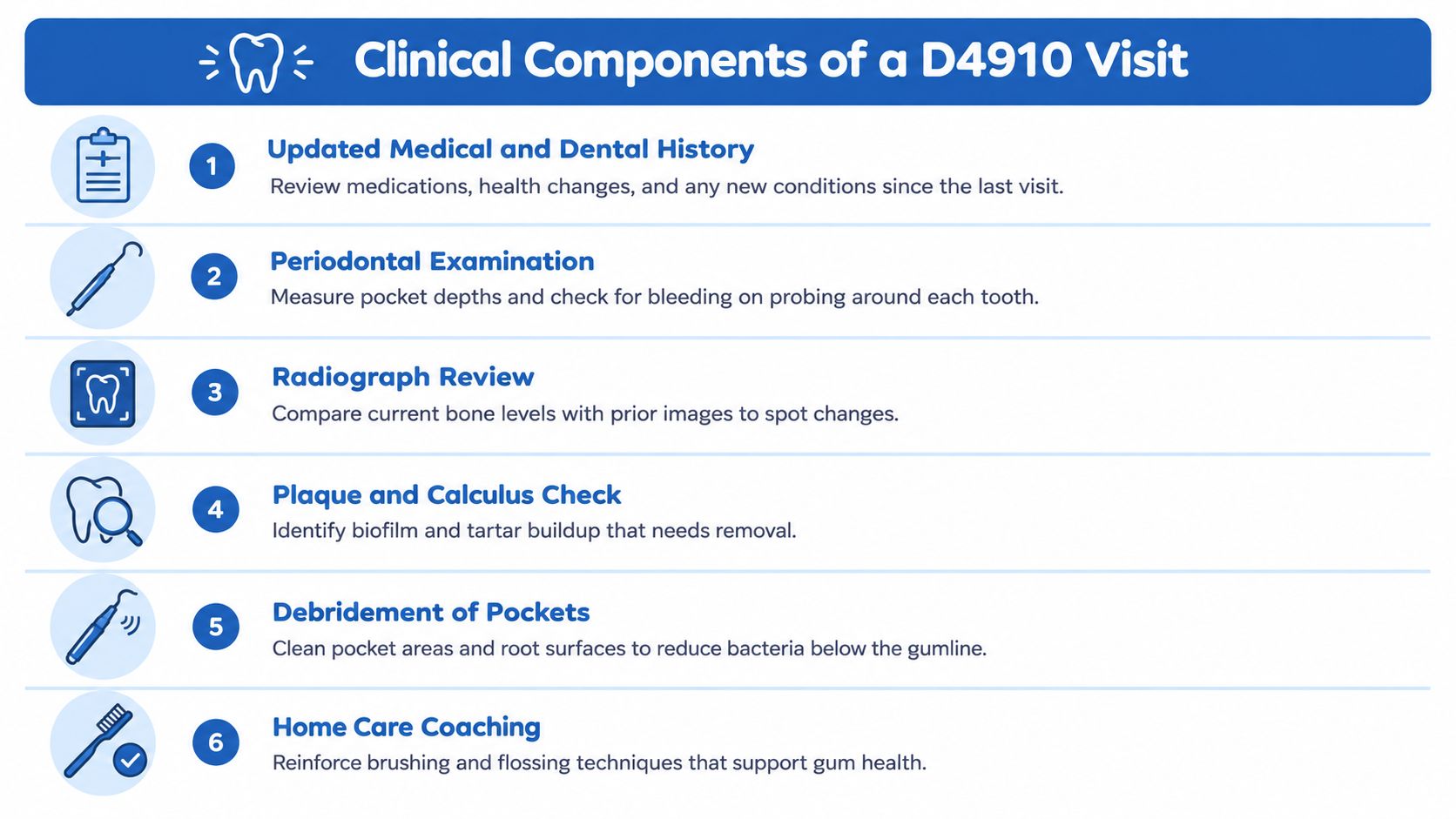
A D4910 visit is guided by what the examination shows, not by a fixed checklist. The clinician first reviews changes since the last appointment, updating medical and dental histories, medications, and conditions that may affect gum health. A new diagnosis or a change in smoking status, for example, can affect how risk is assessed and care is planned.
The clinician then examines the gums and tissues around implants. This may include measuring periodontal pocket depths and attachment levels, checking for bleeding and tooth mobility, and assessing furcation involvement. Furcation involvement means bone loss near the point where a molar's roots divide. Radiographs may also be reviewed when needed to assess bone levels or investigate a concern.
Treatment can include removing plaque and calculus from above and below the gumline, cleaning selected sites more closely, and polishing. These are clinical procedures; an insurer's coverage rules are separate administrative criteria and do not determine what the examination or treatment requires.
What happens during treatment
The clinician removes deposits from tooth surfaces and periodontal pockets, then directs extra attention to sites that need it. For example, a molar area that remains inflamed or bleeds when examined may need site-specific root planing, while other areas receive debridement and polishing. Treatment is adjusted to the findings rather than applied identically throughout the mouth.
Pocket depth helps show the condition of the tissue around a tooth, but it is one measurement among several. This explanation of pocketing around teeth can help clarify the term; ask your clinician how your own measurements relate to your care.
The appointment may also include a review of home hygiene. The clinician can demonstrate brushing or cleaning between teeth and identify places where plaque tends to collect. Home-care coaching supports professional treatment; it doesn't replace it.
When the examination changes the plan
Signs of new or recurring disease may call for further evaluation or active treatment instead of another maintenance visit. The examination guides that decision, so the care provided may differ from what an insurance benefit schedule allows. A claim's coverage rules describe payment, while the clinical plan responds to the patient's condition.
Recommended Visit Frequency and Scheduling
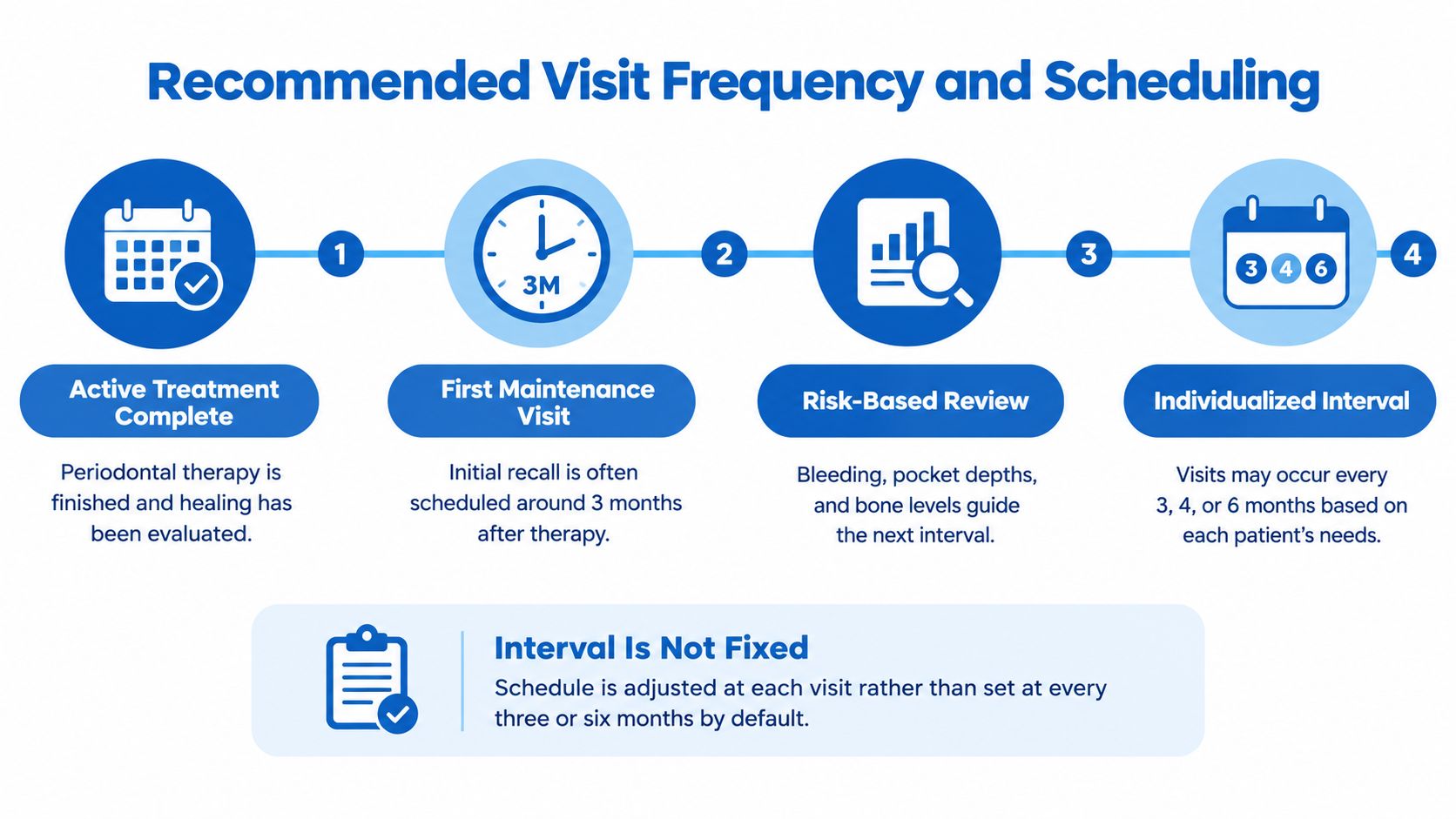
Periodontal maintenance does not follow one fixed calendar. A three- or six-month interval may suit some patients, while others need a different schedule. The clinician sets the timing by assessing the periodontal condition, overall health, risk factors, home-care habits, attendance, and prognosis. At each visit, findings and treatment response help determine whether to keep or adjust the next interval.
The cited clinical criteria recommend that people with a history of periodontal treatment may benefit from maintenance at least four times per year to reduce the risk of disease progression (clinical criteria for periodontal maintenance). This is guidance for care, not a universal legal requirement or a promise that an insurance plan will cover that many visits.
How a clinician chooses the next interval
The next appointment depends on the pattern of findings, much like adjusting a follow-up plan as the patient's condition changes. Persistent bleeding, deeper pockets, smoking, diabetes, or difficulty controlling plaque can support closer follow-up. Stable tissues and consistent home care may support a different interval. One symptom or measurement alone does not determine the schedule.
After active treatment, the clinician assesses whether the tissues have stabilized before setting a maintenance plan. The first maintenance visit may be scheduled around six to eight weeks after active treatment, depending on the patient's condition. This timing is not a fixed D4910 requirement; the treating clinician determines when reassessment and maintenance are appropriate.
A practical schedule therefore has three parts: active treatment, an assessment of stability, and ongoing maintenance at an interval based on clinical findings. The clinician can revisit that interval as the patient's condition changes. Insurance benefits may limit how often visits are covered, so a patient's recommended appointment timing can differ from the benefit schedule. Checking both the clinical recommendation and plan limits helps explain why.
Why Long-Term Maintenance Protects Teeth
After active periodontal treatment, the gums may look healthier, but the clinician still needs to track how they respond over time. Supportive periodontal care means ongoing visits to remove deposits, reassess periodontal measurements, and identify changes that may call for further treatment. Maintenance helps manage risk and protect teeth; it cannot prevent every recurrence.
A Cochrane review of long-term supportive care reported tooth loss of approximately 2% to 5% over five to ten years in retrospective studies. In a separate review of people with advanced stage III or IV periodontitis receiving supportive care for five to twenty years, 9.6% lost more than one tooth, while 24.8% had more than one site with clinical attachment-level loss of at least 2 mm. These findings describe groups, not an individual patient's prognosis. (review of long-term supportive care findings)
Maintenance helps, but doesn't eliminate recurrence
Relapse can vary from one site to another. Smoking and molar furcation involvement, where bone loss affects the area between a tooth's roots, are among the factors associated with greater concern. A stable measurement at one tooth does not necessarily mean every area is stable, which is why clinicians compare findings across sites and visits.
Regular assessment gives the clinician a chance to respond when changes appear, rather than relying only on how the gums feel. Patients who smoke, have relevant medical conditions, or have vulnerable sites may need particular attention. Your clinician can explain which findings shape your care plan and whether the interval should change.
Documenting D4910 for Clinical and Claim Records
A code on a claim cannot explain a patient's periodontal history. The chart must show why maintenance is part of that patient's care and what happened at the visit. That record helps the clinician track changes over time and gives the insurer information to assess the claim.
AAPD guidance specifies documentation of medical and dental histories, periodontal and peri-implant assessments, oral-hygiene guidance, treatment, and an individualized interval (periodontal therapy guidance). The record should connect these details to the patient's diagnosis and care plan.

What a useful record contains
A clear chart can include:
- Disease history and prior therapy: Record the periodontal diagnosis and relevant treatment history so the reason for ongoing maintenance is clear.
- Current periodontal findings: Include full or appropriately updated charting, such as pocket depths, attachment levels, bleeding, mobility, and furcation involvement.
- Imaging when indicated: Include diagnostic-quality radiographs when needed to assess bone levels or investigate a clinical concern.
- Risk and prognosis: Note relevant factors, such as smoking or diabetes, and the clinician's assessment of periodontal stability.
- Visit details: Record debridement, site-specific treatment, polishing when performed, and home-care instructions.
- Next-step plan: State the individualized recall interval and findings that prompted further diagnosis or renewed active treatment.
Explaining unusual timing
The ADA does not set a fixed waiting period after scaling and root planing or surgery. Some insurers apply a waiting period before covering maintenance. If a patient's recommended timing differs from the insurer's expectation, the chart should explain the clinical reason. The schedule in the care plan reflects the clinician's assessment; the insurer's rule determines claim review.
For example, a record can clarify why follow-up is recommended sooner or later than the plan's coverage pattern would suggest. Clear links between history, findings, treatment, and follow-up support continuity of care, including when more than one team member sees the patient.
Insurance Frequency Rules and Referral Implications
What should you ask your insurer before planning D4910 visits? Start by separating the clinical schedule from the benefit rules. Your periodontist sets a recommended interval based on your periodontal condition and follow-up findings. Your insurance contract determines when it may reimburse the procedure. Those schedules can differ, much like a care plan and a payment calendar serve different purposes.
Plan terms may set a limit on how often D4910 is covered, define a waiting period after scaling and root planing, or specify how maintenance relates to routine-cleaning benefits. The details vary by contract, so examples from one plan cannot establish what another patient's plan covers. Check your insurance benefits and coverage information, then confirm the rules directly with your insurer.
Questions to ask the insurer
Before scheduling, ask:
- Frequency: How many D4910 visits does my contract cover, and how is the benefit period measured?
- Waiting period: Does coverage require time to pass after scaling and root planing?
- Prophylaxis relationship: Does D4910 replace or count toward routine-cleaning benefits?
- Patient costs: Could deductibles or other contract terms affect what I owe?
- Records: What information is needed to review a claim?
Keep the answers with your benefits information. They describe payment rules, not whether a clinically recommended visit is appropriate.
Coordinating care across providers
A general dentist or orthodontist may refer you for a periodontal assessment or share records with your periodontist. When providers coordinate, clear communication about your treatment history, current findings, and recommended follow-up helps each clinician understand the care plan. If the proposed visit date falls outside your plan's coverage rules, ask the dental office and insurer what information is needed to clarify benefits, while discussing any timing concerns with your treating clinician.
Quick Reference for D4910 Terms and Rules
| Question | What to clarify with the periodontist | What to clarify with the insurer |
|---|---|---|
| What will happen at the visit? | Which examination or cleaning steps fit your current periodontal findings? | Does the plan classify the submitted service as D4910, and what records may it request? |
| Why is this interval recommended? | Which changes in gum health or other risk factors affect the timing of your next visit? | How many visits are eligible for benefits, and over what period are they counted? |
| What if the schedules differ? | Should the next appointment follow the clinical recommendation even if benefits are limited? | Would an appointment outside the covered schedule affect your out-of-pocket cost? |
| Who should receive the records? | Does your periodontist need information from your general dentist or another treating provider? | Does the plan require records or a referral before reviewing a claim? |
The periodontist sets the care schedule from clinical findings; the insurer applies the contract's benefit rules. Those schedules can differ because they answer different questions.
Choosing Maintenance Care and Taking the Next Step
Feeling better does not always mean periodontal maintenance is no longer needed. Routine cleaning may suit a person without a history of gum disease, while someone treated for periodontitis may need ongoing visits to monitor gum pockets, inflammation, and areas that are difficult to clean. The clinician's findings and treatment history guide that schedule. Insurance rules determine benefits, not the clinical need for care.
A periodontal visit can also help clarify what comes next. The practice has offices in Wilmington, Newark, and Dover, serving adults across New Castle and Kent Counties, including Pike Creek, Hockessin, Bear, Middletown, and nearby communities. Its periodontal care and related treatments include evaluation and maintenance. If you are preparing for a first visit, bring your recent dental records, a list of medications, and any insurance benefit information. These details help the clinician understand your history and explain how the recommended schedule may differ from the plan's coverage limits.
Ask what the examination found, why a particular visit interval is recommended, and which services your plan may cover. If you feel anxious, ask the clinician to explain each step before treatment begins.
To discuss D4910 and a care plan based on your clinical findings, request an appointment with Periodontal Associates of Delaware.